Table of Contents
Learn to identify safe wild plants and medicinal herbs while avoiding toxic lookalikes. Practical tips for foragers from...
Jordan Myers
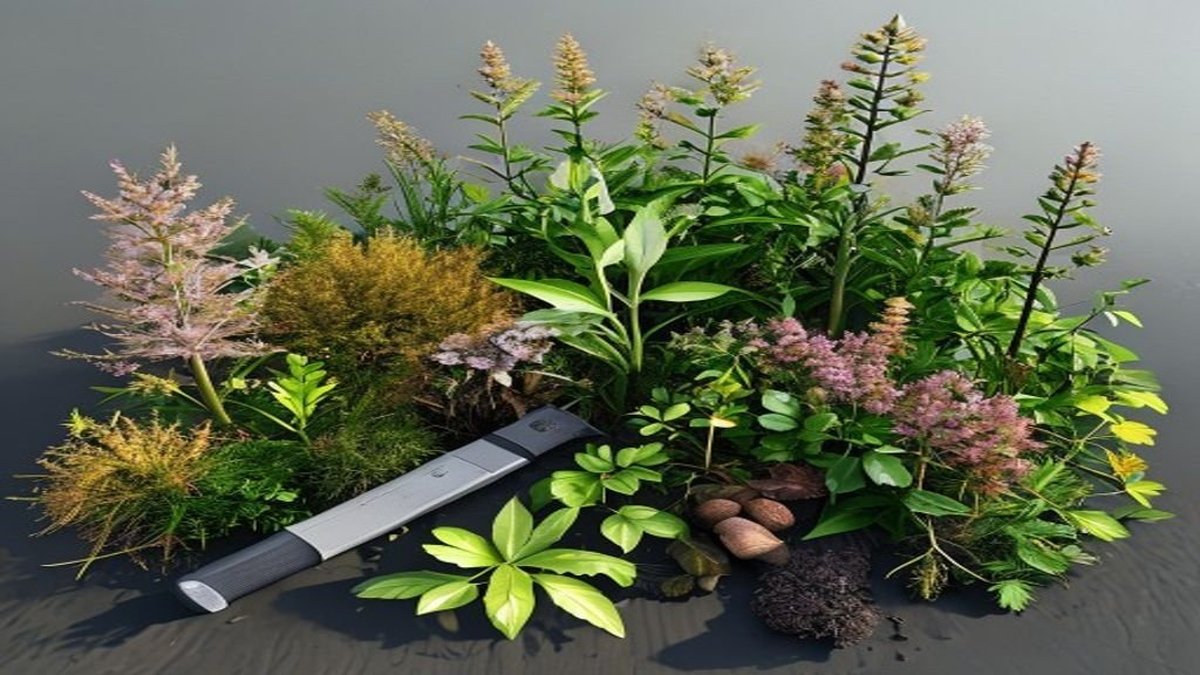
Learn to identify safe wild plants and medicinal herbs while avoiding toxic lookalikes. Practical tips for foragers from...
Every year, poison control centers in the U. S. field over 50,000 calls related to wild plant ingestion. You dont need to become a statistic to enjoy the bounty of the forest. This guide gives you the practical skills to tell safe edible plants from their dangerous mimics.
Start with the universal edibility test only if youre truly lost and hungry. Otherwise, stick to plants with clear, unambiguous markers. Your best tool is a field guide specific to your region, not a generic app. Apps misidentify plants up to 30% of the time according to a 2022 study in the Journal of Ethnobiology.
"The most dangerous plant in the woods is the one you eat without verifying three distinct identifying features. I teach my students to touch, smell, and look before they ever taste." - Dr. Marisol Vega, Ethnobotanist and Survival Instructor
Dandelion (Taraxacum officinale) is your safest starting point. Every part is edible, from root to flower. Youll find it in lawns, meadows, and disturbed soil across North America and Europe. Its leaves contain more vitamin A than carrots and more iron than spinach.
Look for the jagged, tooth-like leaves that grow in a basal rosette. The flower is a single bright yellow head on a hollow stem. Break the stem and white milky sap oozes out. That sap is a mild diuretic, hence the name "piss-en-lit" in French.
Now the toxic lookalike: catsear (Hypochaeris radicata). Catsear leaves are more lobed and hairy, and the stem is solid, not hollow. The flower stems also branch, while dandelion stems are unbranched. If you see any branching, skip it.
Wild garlic (Allium vineale or Allium ursinum) is a foragers dream. The leaves are flat, grass-like, and smell strongly of onion or garlic when crushed. You can use them in pesto, soups, or salads. Theyre packed with allicin, a compound that supports heart health and lowers blood pressure.
Here is your golden rule for wild garlic: always crush a leaf and smell it. If it does not smell like garlic or onion, do not eat it. That simple test can save your life. The toxic lookalike is lily of the valley (Convallaria majalis), which has similar broad leaves but no garlic odor. Lily of the valley contains cardiac glycosides that can stop your heart.
"Ive seen experienced foragers mistake death camas for wild onion. The difference is life and death. Always, always rely on your nose first." - Jake Morrison, Wilderness Medicine Instructor and Author of "Bushcraft Botany"
Chickweed (Stellaria media) is a tender, mild-tasting plant that grows in cool, damp soil. Youll recognize it by its small, oval leaves and tiny white flowers that look like stars. The stem has a single line of hairs running down one side. This is a key identifier.
Chickweed is rich in vitamins C and B6, plus calcium and magnesium. It makes an excellent base for wild salads. One cup of fresh chickweed has about 15% of your daily vitamin C. Harvest it in early spring before it flowers for the best flavor.
Its toxic lookalike is spurge (Euphorbia species). Spurge also has small leaves and a similar growth habit, but it bleeds a white, milky sap when you break the stem. Chickweed sap is clear. If you see white sap, wash your hands and move on. Spurge sap can cause severe skin irritation and blindness if it gets in your eyes.
Yarrow (Achillea millefolium) is a powerful medicinal herb that grows in fields and roadsides. Its feathery, fern-like leaves and flat clusters of white or pink flowers make it easy to spot. Yarrow has been used for centuries to stop bleeding and reduce fever. The leaves contain anti-inflammatory compounds called sesquiterpene lactones.
To use yarrow, crush fresh leaves and apply them directly to a small wound to slow bleeding. You can also steep the leaves and flowers in hot water for a tea that helps with colds and digestive issues. Limit yourself to one cup per day, as yarrow can be strong.
The toxic lookalike is poison hemlock (Conium maculatum). Hemlock also has fern-like leaves, but its stems are smooth with purple spots. Yarrow stems are hairy and not spotted. Hemlock smells like mouse urine when crushed. If you see a plant that looks like yarrow but has purple spots on the stem or a foul odor, stay far away. Ingesting even a small amount of hemlock can cause respiratory failure within hours.
"Yarrow is the Swiss Army knife of medicinal plants, but only if youre certain of your ID. I always tell my students: if the stem has purple spots, youve got a problem." - Dr. Anya Petrova, Clinical Herbalist and Survival Medicine Specialist
First rule: never eat a plant you cannot identify with 100% certainty. If you have any doubt, leave it alone. Second rule: always cross-reference at least three identification features. Use leaf shape, stem characteristics, flower structure, and smell. Third rule: start with a small amount of any new edible plant. Even safe plants can cause allergic reactions in some people.
Carry a pocket-sized guide and a magnifying loupe on every foraging trip. The loupe lets you see fine hairs, stem details, and seed structures that are invisible to the naked eye. A 10x magnification works well. Practice identifying plants in your backyard before heading into the backcountry.
Finally, remember that habitat matters. Plants growing near roads, industrial sites, or agricultural fields may absorb heavy metals or pesticides. Harvest at least 100 feet from any road or treated area. Your safety depends on both correct identification and clean harvesting practices.
A well-designed survival kit fits in a small pouch but contains items that address the top priorities: shelter, water, fire, and signaling. Include a space blanket or emergency bivvy for shelter, a reliable fire starter like a ferro rod, water purification tablets, a whistle for signaling, and a small first aid kit. Carry this kit on every outdoor adventure, even short day hikes, because emergencies rarely happen when you are fully prepared.
Survival experts agree that mindset often determines outcomes more than gear or skill. The will to survive keeps people alive in situations where rescue seems impossible. Focus on small, achievable goals rather than overwhelming yourself with the full scope of the situation. Use the STOP acronym: Stop, Think, Observe, Plan. Take deliberate action rather than panicking. Many survivors credit their positive attitude and refusal to give up as the deciding factor.
Finding safe drinking water is one of the most immediate survival priorities. Look for water sources in valleys, at the base of cliffs where seeps emerge, and where vegetation is greener than the surrounding area. Morning dew collected with an absorbent cloth provides a surprising amount of water. In snow conditions, melt snow rather than eating it directly, which lowers body temperature and increases dehydration risk.
A well-designed survival kit fits in a small pouch but contains items that address the top priorities: shelter, water, fire, and signaling. Include a space blanket or emergency bivvy for shelter, a reliable fire starter like a ferro rod, water purification tablets, a whistle for signaling, and a small first aid kit. Carry this kit on every outdoor adventure, even short day hikes, because emergencies rarely happen when you are fully prepared.
Survival experts agree that mindset often determines outcomes more than gear or skill. The will to survive keeps people alive in situations where rescue seems impossible. Focus on small, achievable goals rather than overwhelming yourself with the full scope of the situation. Use the STOP acronym: Stop, Think, Observe, Plan. Take deliberate action rather than panicking. Many survivors credit their positive attitude and refusal to give up as the deciding factor.
Finding safe drinking water is one of the most immediate survival priorities. Look for water sources in valleys, at the base of cliffs where seeps emerge, and where vegetation is greener than the surrounding area. Morning dew collected with an absorbent cloth provides a surprising amount of water. In snow conditions, melt snow rather than eating it directly, which lowers body temperature and increases dehydration risk.
A well-designed survival kit fits in a small pouch but contains items that address the top priorities: shelter, water, fire, and signaling. Include a space blanket or emergency bivvy for shelter, a reliable fire starter like a ferro rod, water purification tablets, a whistle for signaling, and a small first aid kit. Carry this kit on every outdoor adventure, even short day hikes, because emergencies rarely happen when you are fully prepared.
Survival experts agree that mindset often determines outcomes more than gear or skill. The will to survive keeps people alive in situations where rescue seems impossible. Focus on small, achievable goals rather than overwhelming yourself with the full scope of the situation. Use the STOP acronym: Stop, Think, Observe, Plan. Take deliberate action rather than panicking. Many survivors credit their positive attitude and refusal to give up as the deciding factor.
Finding safe drinking water is one of the most immediate survival priorities. Look for water sources in valleys, at the base of cliffs where seeps emerge, and where vegetation is greener than the surrounding area. Morning dew collected with an absorbent cloth provides a surprising amount of water. In snow conditions, melt snow rather than eating it directly, which lowers body temperature and increases dehydration risk.