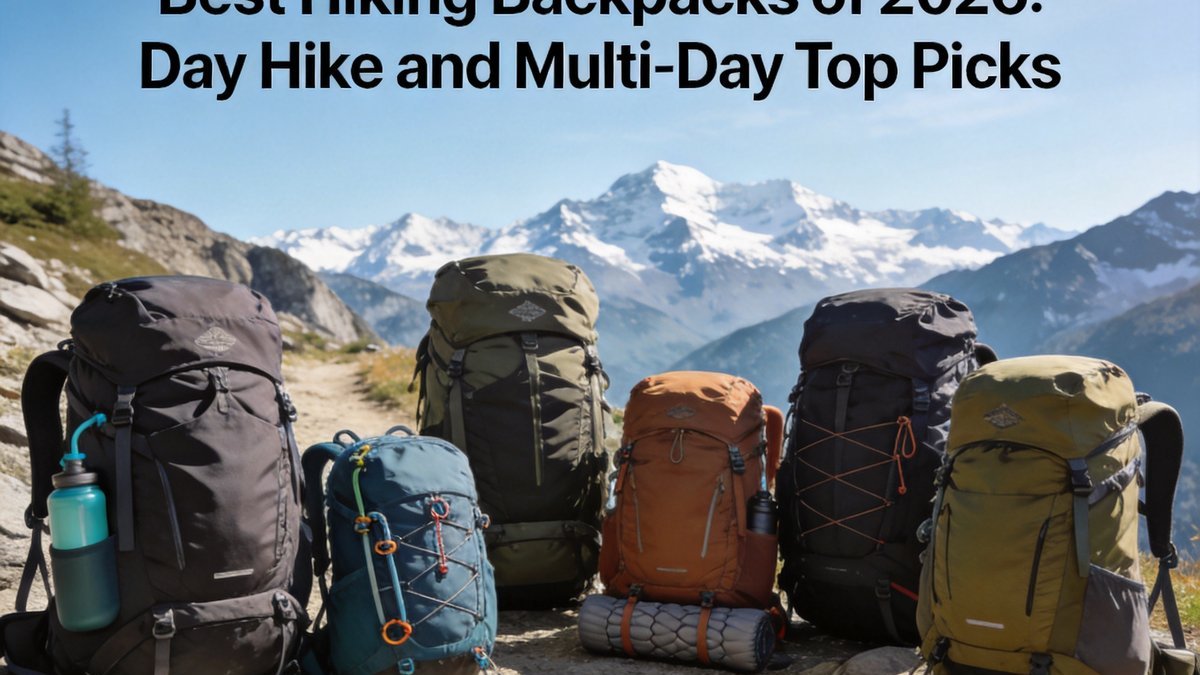
Your backpack is the most personal piece of hiking gear you will own. It carries everything you need for the trail, and a poorly fitting pack can turn a beautiful hike into a painful ordeal. We tested 15 of the top hiking backpacks available in 2026 across day hikes, weekend trips, and extended treks to help you find the perfect fit for your adventures.
Key Takeaways
- Fit matters more than features. A pack that fits your torso length and hip shape distributes weight properly and prevents pain.
- Day packs: 15-30 liters for most day hikes. Multi-day packs: 40-70 liters depending on trip length and gear volume.
- Ultralight packs sacrifice suspension and comfort for weight savings. Choose based on your total pack weight, not pack weight alone.
- Try packs with your typical load before buying. A pack that feels great empty may perform poorly with 25 pounds of gear.
Best Day Hiking Backpacks (15-30 Liters)
Day hiking backpacks prioritize lightweight comfort, organization, and accessibility over the load-carrying capacity of larger packs. The Osprey Talon 22 leads the day pack category with its excellent AirScape suspension that keeps your back cool while carrying loads up to 20 pounds comfortably. Multiple pockets organize gear efficiently, and the integrated rain cover provides weather protection. The Deuter Speed Lite 30 offers more capacity for longer day hikes, weighing under 2 pounds while maintaining impressive load stability through its Delrin U-frame. The REI Co-op Flash 22 provides exceptional value at under $100 with a surprisingly capable suspension for its weight class. For minimalists, the Patagonia Nine Trails 20 offers a simple, durable design that works equally well on trails and in town.
Best Multi-Day Backpacks (40-70 Liters)
Multi-day backpacks require robust suspension systems to carry heavier loads comfortably over multiple days. The Osprey Atmos AG 65 continues to dominate this category with its Anti-Gravity suspension that creates a trampoline-like back panel, keeping the load off your back while maintaining excellent ventilation. The adjustable torso length and custom-fit hip belt accommodate a wide range of body types. The Gregory Baltoro 75 offers maximum carrying capacity for extended expeditions with its Response A3 suspension that moves naturally with your body. The Deuter Aircontact Lite 60+10 provides exceptional load stability for off-trail travel. For women-specific fit, the Osprey Aura AG 65 and Gregory Deva 70 offer tailored suspension geometries that accommodate different hip shapes and torso proportions.
Ultralight Backpacking Packs (Under 3 Pounds)
Ultralight backpacks sacrifice suspension features and durability to achieve minimum weight. These packs work best for hikers who have reduced their total gear weight to under 20 pounds. The Hyperlite Mountain Gear 3400 Junction uses Dyneema Composite Fabric to achieve a 2-pound weight while maintaining impressive waterproofness and durability. The pack features a simple roll-top closure and minimal pockets, appealing to experienced ultralight hikers who prefer simplicity. The Zpacks Arc Blast 55 uses carbon fiber stays to create an arched back panel that keeps the pack off your back while weighing only 1.4 pounds. Gossamer Gear Mariposa 60 provides a more feature-rich ultralight option with multiple pockets and a removable frame that adapts to different load requirements.
Packing Tips for Any Backpack
How you pack your backpack affects comfort more than the pack itself. Heavy items belong close to your back and centered between your shoulders. Sleeping bags and clothing go in the bottom compartment or stuff sack. Stove fuel, food, and water sit in the middle spine area. Light items like your sleeping pad strap to the outside or fill the top compartment. Use compression sacks for clothing and sleeping bags to reduce volume. Keep frequently used items like rain gear, snacks, and your first aid kit in external pockets or the top lid. Adjust your pack's load lifters, sternum strap, and hip belt after loading to optimize weight distribution. The hip belt should carry 80 to 90 percent of the pack weight, with shoulder straps stabilizing the load rather than supporting it.
| Backpack | Capacity | Weight | Best For | Price |
|---|---|---|---|---|
| Osprey Talon 22 | 22L | 1.7 lbs | Day hikes, fast & light | $160 |
| Deuter Speed Lite 30 | 30L | 1.9 lbs | Long day hikes | $180 |
| REI Co-op Trail 40 | 40L | 2.8 lbs | Overnight trips | $179 |
| Osprey Atmos AG 65 | 65L | 4.5 lbs | Multi-day treks | $290 |
| Gregory Baltoro 75 | 75L | 5.1 lbs | Extended expeditions | $340 |
| Hyperlite 3400 Junction | 55L | 2.0 lbs | Ultralight backpacking | $385 |
A common misconception is that backpacks should sit high on your shoulders. In reality, the hip belt should wrap around your iliac crest, the bony ridge at the top of your hips, with the belt padding sitting on your hip bones. The shoulder straps should follow your shoulder contour without gaping or digging in.
The best backpack is the one that fits you properly and matches your trip type. An award-winning 65-liter expedition pack is a terrible choice for a 3-mile day hike, just as a 20-liter day pack is inadequate for a week-long trek.
Frequently Asked Questions
How do I measure my torso length for a backpack?
Ask someone to measure from the bony bump at the base of your neck (C7 vertebra) to the top of your iliac crest, the bony ridge at your hip level. This measurement determines your pack size. Most outdoor stores provide free fitting services.
Should I get a framed or frameless pack?
Framed packs provide better load transfer to your hips and are necessary for loads over 20 pounds. Frameless packs save weight but require careful packing to create structure and cannot carry heavy loads comfortably.
How do I clean my hiking backpack?
Hand wash with mild soap and warm water. Use a soft brush for stubborn dirt. Rinse thoroughly and air dry completely before storing. Never machine wash or dry.
Do I need a waterproof backpack?
Most backpacks are water-resistant rather than waterproof. A pack cover provides the most practical weather protection. For serious wet-weather hiking, use dry bags inside your pack.