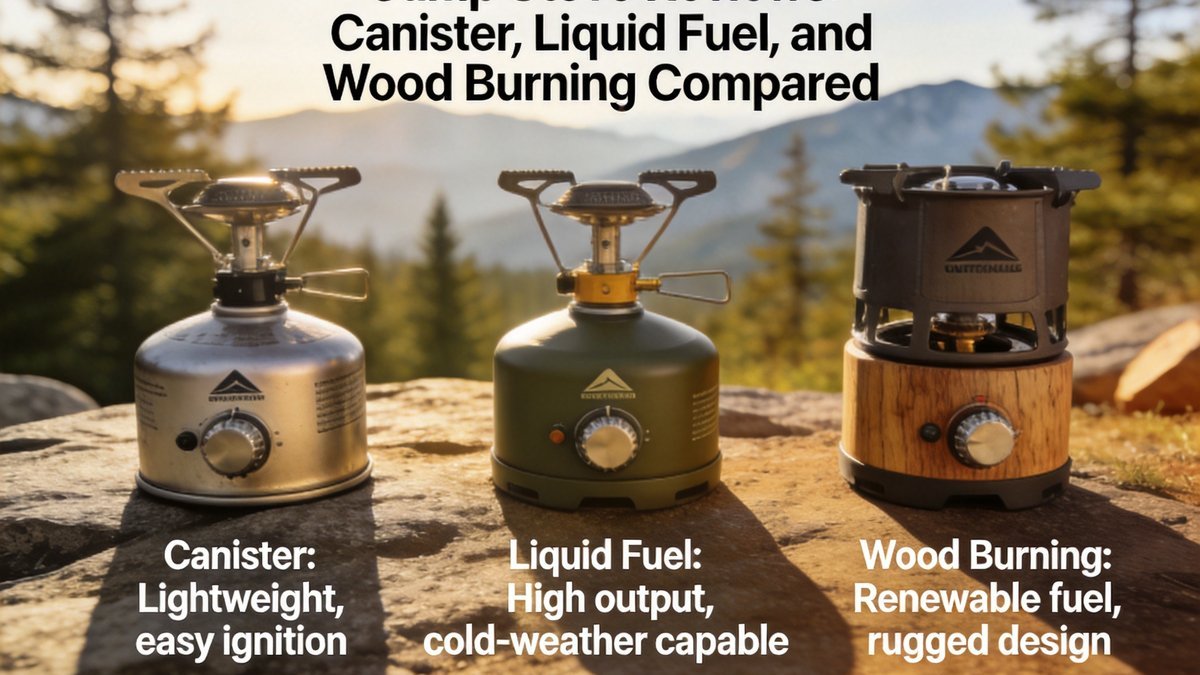
A reliable camp stove transforms outdoor cooking from a campfire challenge into a controlled, efficient process. We tested 12 popular camp stoves across three fuel types to help you choose the perfect stove for your camping style.
Key Takeaways
- Canister stoves offer the best convenience for three-season camping. They light instantly, boil water fast, and require no priming.
- Liquid fuel stoves perform better in cold weather and at high altitude. They work with multiple fuel types for international travel.
- Wood burning stoves use natural fuel but require dry wood. They work best for base camp cooking.
- Stove weight correlates with features. Ultralight stoves under 3 ounces sacrifice simmer control and stability.
Canister Stove Performance
Canister stoves dominate the backpacking market for good reason. The MSR PocketRocket 2 epitomizes the ultralight canister stove at just 2.6 ounces, boiling a liter in 3.5 minutes. Its foldable pot supports pack flat and the piezo igniter eliminates the need for matches. The Jetboil Flash represents the integrated canister system category, combining stove and pot into one efficient unit. The Primus Classic Trail offers wider pot supports for stable cooking. Canister stoves perform poorly below freezing because the butane-propane mix loses pressure. They cannot be refilled and wind significantly affects their efficiency.
Liquid Fuel Stove Performance
Liquid fuel stoves solve the cold weather and altitude limitations of canister stoves. The MSR WhisperLite Universal burns white gas, kerosene, unleaded gasoline, and canister fuel with a simple jet change, making it ideal for international travel. The Coleman Dual Fuel powers two-burner camping stoves for car camping. Liquid fuel stoves require more maintenance including periodic cleaning of the jet and generator. They need priming before use, a process that adds a minute to startup time.
Wood Burning Stove Performance
Wood burning stoves appeal to ultralight hikers who want to avoid carrying fuel. The Solo Stove Titan uses a double-wall design creating secondary combustion for more complete and efficient fuel use. Performance depends heavily on wood quality. Dry hardwood produces excellent heat with minimal smoke. Wet wood smolders. Wood stoves work best for base camp cooking where you have time to gather and tend fuel.
Choosing the Right Stove
For three-season backpackers, an ultralight canister stove provides the best weight-to-performance ratio. For cold-weather campers, a liquid fuel stove offers reliable performance below freezing. For car campers, a two-burner propane stove provides versatility. For ultralight enthusiasts who enjoy the process, a wood burning stove eliminates fuel weight entirely.
| Stove Model | Fuel Type | Weight | Boil Time (1L) | Best For | Price |
|---|---|---|---|---|---|
| MSR PocketRocket 2 | Canister | 2.6 oz | 3.5 min | Ultralight backpacking | $45 |
| Jetboil Flash | Canister | 13.1 oz | 4.5 min | Fast boiling | $110 |
| Primus Classic Trail | Canister | 8.5 oz | 4.0 min | Versatile camping | $50 |
| MSR WhisperLite Universal | Liquid/Gas | 12.5 oz | 4.0 min | Cold weather, intl travel | $110 |
| Coleman Dual Fuel | Liquid/Gas | 27 oz | 5.0 min | Car camping | $90 |
| Solo Stove Titan | Wood | 18.5 oz | 6.5 min | Base camp cooking | $90 |
The best camp stove is the one you have with you and know how to use. An ultralight canister stove that you have practiced operating beats a heavy expedition stove sitting at home because you did not want to carry it.
Wind is the enemy of efficient camp stove operation. A 10 mph wind can double your boil time. Use a windscreen or find a natural windbreak behind a rock or log to significantly improve efficiency.
Stove Maintenance and Field Repairs
Regular stove maintenance prevents failures at critical moments. After each trip, clean the burner head by brushing away carbon deposits and food residue. For canister stoves, check the O-ring seal for cracks or deterioration. If the stove flares or burns yellow, the burner ports may be clogged. Clean them with the prong of a safety pin or a specialized stove cleaning tool. Liquid fuel stoves require more frequent maintenance. Clean the generator and jet after every 10-15 hours of operation using the cleaning cable that comes with the stove.
Carry a basic stove repair kit: a spare O-ring, cleaning needle, and a small section of fuel line for liquid stoves. Check that your stove's fuel canister threads are compatible with your brand of fuel. Butane-propane mix canisters have the Lindal valve as a universal standard, but some regions use threaded canisters that require an adapter. Wind is the most common cause of stove problems in the field. A wind screen made of aluminum flashing or a commercial product like the MSR WindBurner system can reduce boil time by 30 to 50 percent in breezy conditions. Never use a windscreen that wraps completely around a canister stove, as this can cause dangerous overheating.
Fuel Efficiency and Boil Time Comparisons
Fuel efficiency varies significantly between stove types and models. Canister stoves typically boil 10-15 liters per 100-gram fuel canister under ideal conditions. Wind and cold reduce efficiency by 30 to 50 percent. Liquid fuel stoves get 15-25 boils per 20-ounce fuel bottle depending on the fuel type. White gas provides the most BTUs per ounce. Kerosene provides good performance in cold weather but produces more soot. Unleaded gasoline works in a pinch but reduces stove life due to additives that leave deposits.
Boil time measurements from manufacturers are taken under ideal lab conditions with 70-degree water, no wind, and optimized equipment. Real-world boil times are typically 30 to 100 percent longer. A stove that boils a liter in 3.5 minutes in the lab may take 5-7 minutes in 40-degree weather with a 10 mph wind. The Jetboil integrated systems excel at boil efficiency because the heat exchanger on the pot captures exhaust heat that is lost in standard pot setups. For backpackers who primarily boil water for dehydrated meals, an integrated system is worth the weight premium. For those who simmer sauces or cook complex meals, a standard remote-canister stove with a wider pot provides better temperature control.
Choosing Between Canister and Liquid Fuel Stoves
Canister stoves dominate the lightweight backpacking market for good reason. They light instantly, require no priming, and provide precise flame control. The fuel canisters are self-sealing and easy to use. The downsides are that isobutane-propane canisters lose pressure in cold temperatures, becoming unreliable below freezing. Empty canisters must be carried out and recycled properly, which is inconvenient on long trips. Canisters also make it impossible to know how much fuel remains without weighing them. For 3-season use in moderate climates, canister stoves provide the best balance of weight, convenience, and performance.
Liquid fuel stoves burn white gas, kerosene, or even unleaded gasoline, giving them flexibility for international travel where canisters may be unavailable. They perform reliably in cold weather since fuel pressure comes from hand-pumping the bottle rather than relying on canister pressure. The fuel bottle is refillable, reducing waste. The drawbacks include heavier weight, more complex operation requiring priming, and a higher risk of flare-ups during startup. Liquid fuel stoves are the preferred choice for winter camping, high-altitude expeditions, and trips longer than two weeks where fuel efficiency and refillability become significant.
Frequently Asked Questions
Can I fly with a camp stove?
Canister stoves with fuel attached are prohibited. Empty stoves are fine. Liquid fuel bottles must be empty and clean of fuel vapors. Purchase fuel at your destination.
How much fuel do I need per day?
A typical backpacker uses 15 to 25 grams per day for breakfast and dinner. A 100-gram canister lasts 4 to 6 days for solo cooking.
Are alcohol stoves a good option?
Alcohol stoves offer ultralight weight and silent operation. They perform poorly in cold weather and have longer boil times. They work for summer solo trips.
How do I maintain my camp stove?
Clean the burner head after each trip. For liquid fuel stoves, clean the generator and jet periodically. Store stoves with fuel canisters detached.