Table of Contents
Planning a family camping trip? Get 20 essential tips for camping with kids, from packing strategies and kid-friendly activities to safety and meal planning advice.
Jordan Myers
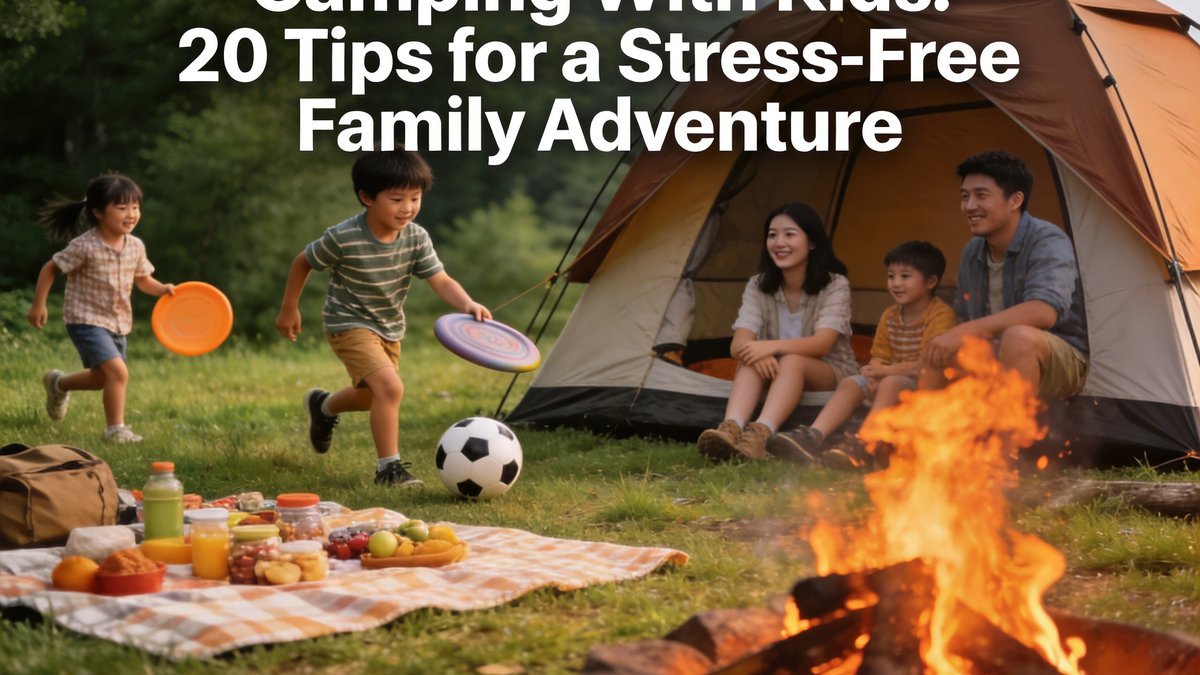
Planning a family camping trip? Get 20 essential tips for camping with kids, from packing strategies and kid-friendly activities to safety and meal planning advice.
Camping with kids transforms the outdoor experience. The peaceful solitude of solo camping gives way to the joyful chaos of puddle jumping, marshmallow roasting, and bedtime stories by lantern light. Family camping creates memories that children carry for a lifetime, but it requires a different approach than adult-only trips. These tips help ensure your family adventure is fun for everyone.
Involve your kids in trip planning to build excitement and ownership. Let each child pack their own small backpack with comfort items, a flashlight, and a favorite stuffed animal. Practice setting up the tent in your backyard before the real trip so children understand the sleeping arrangement and feel comfortable with the equipment. Discuss camp rules in advance: stay within sight of camp, always use the buddy system, and never touch unknown plants or animals. Show pictures of the campsite and surrounding area to reduce anxiety about the unknown. For younger children, read picture books about camping to introduce concepts like sleeping in a tent, using an outhouse, and cooking over a fire. A well-prepared child adapts to the camping environment much faster.
Bring more clothes than you think necessary. Children generate messes at an astonishing rate, and wet or dirty clothes turn a happy camper into a miserable one quickly. Pack at least two complete outfit changes per day, with extra socks as the single most important item. A dedicated dry bag for each family member keeps sleeping clothes and pajamas separate from daytime clothes. Bring familiar snacks from home alongside camping treats. Novelty foods add excitement, but familiar snacks provide comfort and ensure picky eaters have something they enjoy. Pack a small toy bin with glow sticks, bubbles, sidewalk chalk, and small action figures for downtime entertainment.
Structured activities prevent the boredom complaints that derail adult relaxation time. Plan nature scavenger hunts with printable lists of items to find: specific leaves, rocks, animal tracks, and bird feathers. Geocaching offers a modern treasure hunt that teaches navigation skills and keeps kids engaged for hours. Bring a simple field guide to local wildlife, plants, and stars to turn everyday observations into learning opportunities. Fishing, when available, provides quiet focus time that even young children enjoy with proper supervision. Evening campfire activities deserve special attention. Prepare storytelling prompts, sing-along song sheets, and marshmallow roasting sticks. The combination of firelight, stories, and s'mores creates the core memories that children carry into adulthood.
Children often struggle to sleep at camp because the environment is unfamiliar and it stays light much later than their usual bedtime. Maintain as much of your regular bedtime routine as possible. Read a story, sing a song, and use a familiar blanket or stuffed animal. Darken the tent by covering mesh windows with a dark cloth or using a tent with blackout fabric. White noise from a phone or dedicated machine masks unfamiliar forest sounds that might wake children. Expect younger children to wake earlier than usual as the sun rises and birds become active. Plan for early morning activities rather than fighting nature's alarm clock.
The goal of camping with kids is not the perfect wilderness experience. The goal is to raise children who love the outdoors. If that means cutting the trip short, abandoning the gourmet camp meal for hot dogs, or letting them watch a tablet in the tent at night, so be it.
Experienced family campers follow the three-hour rule: plan activities in blocks of no more than three hours, with a snack break built into each block. Children lose focus and patience beyond this window, and pushing through their resistance guarantees a meltdown.
There is no minimum age, but many families start around 6 to 12 months when babies become more adaptable. Infant camping requires extra gear like portable cribs and extensive clothing layers. Toddlers from 2 to 4 years old present the highest challenge level due to limited reasoning skills and high mobility without safety awareness. Most families find the sweet spot starts around age 5 or 6.
Keep a dedicated potty setup in or near the tent for nighttime emergencies. A portable camping toilet, a lidded bucket with a seat, or even a wide-mouth urine bottle for older children reduces the need for full middle-of-the-night bathroom walks. Keep a headlamp and toilet paper accessible inside the tent.
Prepare children before the trip by playing recordings of common night sounds like owls, coyotes, and frogs. Explain that these animals are more afraid of humans than we are of them. Keep a comfort item and a small flashlight within reach in the tent. If fear persists, move your sleeping bag closer to your child and talk calmly about the sounds they hear.
Establish a safety circle rule: kids must stay behind the designated safety perimeter marked with rocks, rope, or glow sticks. Teach the stop, drop, and roll technique before lighting the fire. Keep a bucket of water and a fire extinguisher nearby. Assign a responsible adult to fire duty whenever the fire is burning and children are awake.
Respecting other campers and the environment makes the experience better for everyone. Keep noise levels down, especially after quiet hours. Observe the 200-foot rule for setting up camp away from water sources and trails. Pack out all trash, including biodegradable items like apple cores, which take weeks to decompose in natural environments. Following these principles ensures campsites remain pristine for future visitors.
Testing your gear before heading into the backcountry prevents unpleasant surprises. Set up your tent in the backyard and spray it with a hose to check for leaks. Test your stove outside to ensure it lights and burns evenly. Break in new boots with short walks before a long hike. A pre-trip gear check takes an hour and can save you from a miserable night in the woods.
Proper food storage protects both you and the wildlife in the area. Store all food, trash, and scented items in bear-proof containers or hang them from a designated pole at least 10 feet off the ground and 4 feet from the nearest tree trunk. Cook at least 100 yards from your tent to avoid attracting animals to your sleeping area. Never store food inside your tent, even for a short nap.
Respecting other campers and the environment makes the experience better for everyone. Keep noise levels down, especially after quiet hours. Observe the 200-foot rule for setting up camp away from water sources and trails. Pack out all trash, including biodegradable items like apple cores, which take weeks to decompose in natural environments. Following these principles ensures campsites remain pristine for future visitors.
Testing your gear before heading into the backcountry prevents unpleasant surprises. Set up your tent in the backyard and spray it with a hose to check for leaks. Test your stove outside to ensure it lights and burns evenly. Break in new boots with short walks before a long hike. A pre-trip gear check takes an hour and can save you from a miserable night in the woods.
Proper food storage protects both you and the wildlife in the area. Store all food, trash, and scented items in bear-proof containers or hang them from a designated pole at least 10 feet off the ground and 4 feet from the nearest tree trunk. Cook at least 100 yards from your tent to avoid attracting animals to your sleeping area. Never store food inside your tent, even for a short nap.
Respecting other campers and the environment makes the experience better for everyone. Keep noise levels down, especially after quiet hours. Observe the 200-foot rule for setting up camp away from water sources and trails. Pack out all trash, including biodegradable items like apple cores, which take weeks to decompose in natural environments. Following these principles ensures campsites remain pristine for future visitors.
Testing your gear before heading into the backcountry prevents unpleasant surprises. Set up your tent in the backyard and spray it with a hose to check for leaks. Test your stove outside to ensure it lights and burns evenly. Break in new boots with short walks before a long hike. A pre-trip gear check takes an hour and can save you from a miserable night in the woods.
Proper food storage protects both you and the wildlife in the area. Store all food, trash, and scented items in bear-proof containers or hang them from a designated pole at least 10 feet off the ground and 4 feet from the nearest tree trunk. Cook at least 100 yards from your tent to avoid attracting animals to your sleeping area. Never store food inside your tent, even for a short nap.