Table of Contents
Kayaking opens up waterways from calm lakes to rushing rivers. Understanding the different disciplines helps you choose the right boat and training path.
Jordan Myers
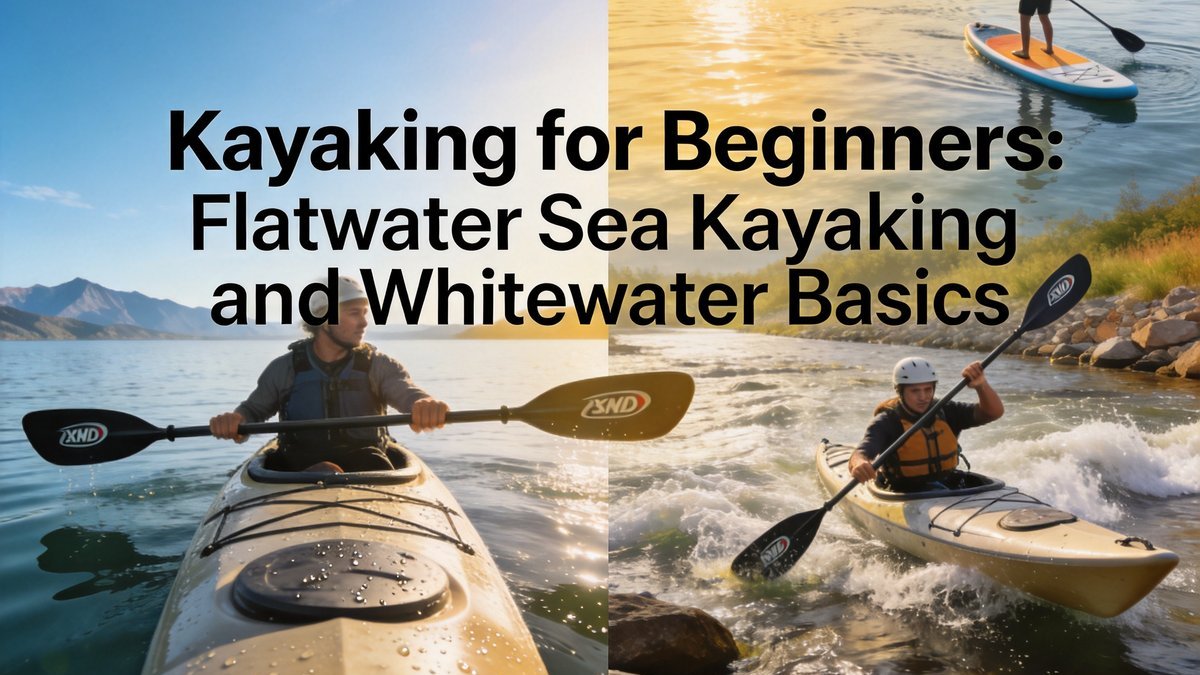
Kayaking opens up waterways from calm lakes to rushing rivers. Understanding the different disciplines helps you choose the right boat and training path.
Kayaking opens up waterways from calm lakes to rushing rivers. Understanding the different disciplines helps you choose the right boat and training path.
Kayaking encompasses several distinct disciplines that share basic paddling techniques but require different boats and equipment. Recreational kayaking includes calm water paddling on lakes, slow rivers, and protected bays. These kayaks are stable, forgiving, and designed for comfort. Recreational kayaks are ideal for beginners and casual paddlers exploring gentle waters at a relaxed pace.
Sea kayaking involves paddling on open water including oceans, large lakes, and exposed coastlines. Sea kayaks are longer and narrower than recreational boats, designed for efficiency over distance and handling rougher conditions. Sea kayakers need navigation skills, weather interpretation, tide planning, and self-rescue techniques. Expedition sea kayaking can involve multi-day trips with camping gear stored in watertight compartments.
Whitewater kayaking is the most technically demanding discipline. Short, maneuverable kayaks with specialized hull designs allow paddlers to navigate rapids, eddies, and drops. Whitewater kayaking requires significant training in river reading, eddy turns, ferrying, self-rescue, and roll techniques. The progression from flatwater to whitewater should be gradual with proper instruction at each stage.
A personal flotation device is non-negotiable for kayaking. Choose a PFD designed specifically for paddling with a high-cut back that does not interfere with the kayak seat backrest. The PFD must fit snugly and be comfortable enough to wear for extended periods. Try on multiple models before purchasing, as fit varies significantly between brands.
Your paddle choice affects efficiency and comfort significantly. Paddle length depends on your height, boat width, and paddling style. Feather angle adjustments allow you to reduce wind resistance on the blade that is not in the water. Bent-shaft paddles offer ergonomic benefits for flatwater paddling. Straight shafts provide more power transfer for aggressive paddling.
A spray skirt keeps water out of the kayak cockpit. For recreational kayaking in calm conditions, a spray skirt is optional. For sea kayaking and whitewater kayaking, a spray skirt is essential safety equipment. Choose a skirt that fits your cockpit rim snugly and allows quick release with a grab loop. Neoprene skirts provide better seal than nylon for cold water paddling.
The forward stroke is the foundation of efficient kayaking. Rotate your torso rather than relying on arm strength alone. The paddle blade should enter the water near your feet and exit near your hips. Your upper hand pushes forward while your lower hand pulls back. A proper forward stroke engages your core muscles, reducing arm fatigue and increasing efficiency.
The reverse stroke stops or moves your kayak backward. It mirrors the forward stroke with blade entry near your hips and exit near your feet. The reverse stroke is essential for maneuvering in tight spaces, backing away from obstacles, and maintaining position in current while you assess your next move.
Sweep strokes turn the kayak. The forward sweep moves the bow away from your paddle side, turning the boat. The reverse sweep turns the boat in the opposite direction. Combining forward and reverse sweeps with edging the kayak allows precise turning in tight quarters. Practice sweep strokes in open water before needing them in confined spaces.
Self-rescue skills are essential for any kayaker venturing beyond wading depth. The wet exit is the first skill to learn: releasing your spray skirt, pushing yourself out of the cockpit, and surfacing beside your boat. Practice wet exits in warm, shallow water with supervision until the motion becomes automatic. Never kayak in conditions beyond your self-rescue ability.
The T-rescue is the standard assisted rescue technique. A rescuing kayaker positions their boat perpendicular to the capsized kayak. They lift the overturned boat, drain the water, and stabilize it while the swimmer re-enters. Both paddlers should practice T-rescues until the sequence is smooth. This rescue technique works in most conditions with proper practice.
Pump and roll techniques allow self-rescue without leaving the boat. The paddle float rescue uses a float attached to the paddle blade for stability while re-entering. The Eskimo roll rights the kayak without exiting the cockpit. The roll is an advanced skill requiring professional instruction and dedicated practice in warm, safe conditions.
Begin your kayaking journey on flatwater. Lakes, slow rivers, and protected bays provide a safe environment for learning paddle strokes, boat control, and basic rescue techniques. Spend at least 10-20 hours on flatwater before considering moving water. Flatwater skills including boat control, edging, and bracing transfer directly to more challenging conditions.
Class I and II rapids provide the next progression step after flatwater skills are solid. These rapids feature straightforward channels with small waves and few obstacles. Take a whitewater kayaking course from a certified instructor before your first river trip. Professional instruction establishes safe habits and proper technique that are difficult to correct once ingrained.
Advancing to Class III and beyond requires significant experience and training. Class III rapids feature moderate waves, complex maneuvering, and potential obstacles requiring quick decision-making. Paddlers should have a reliable combat roll, strong eddy turns and ferrying skills, and experience reading moving water before attempting Class III rapids.
"The best kayaker is not the one who runs the hardest rapids or paddles the farthest distance. It is the one who returns to the put-in with a smile, ready to plan the next trip."
"Respect the water, know your limits, and never paddle alone in conditions beyond your skill level. The water will always be there tomorrow for another trip."
You should be comfortable in the water and able to swim at least 50 meters while wearing a PFD. Kayakers capsize and swim regularly, especially when learning. Strong swimming ability makes self-rescue easier and reduces panic in unexpected situations. Take swimming lessons if you are not confident in the water.
A recreational kayak 10-12 feet long with a flat hull and large cockpit is ideal for beginners. These boats are stable, forgiving, and easy to enter and exit. Look for a kayak with bulkheads or flotation bags for safety. Sit-on-top kayaks are excellent for warm water paddling as they cannot sink and are self-draining.
Kayaks are typically transported on roof racks with foam blocks or J-style carriers. Tie the kayak down with cam straps front and back, plus bow and stern lines. Soft racks that rest on car doors work for occasional transport. Many beginners start with inflatable or folding kayaks that fit in a car trunk.
Cold weather kayaking requires appropriate gear including a dry suit or wetsuit, neoprene booties, pogies for paddle hand warmth, and a warm hat. Hypothermia risk is serious in cold water. Dress for the water temperature not the air temperature. In water below 60 degrees Fahrenheit, wear insulation appropriate for extended immersion.
Safety on the water begins before you launch. Always wear a properly fitted personal flotation device, regardless of your swimming ability or water conditions. Check weather forecasts and river flow rates before every trip. File a float plan with someone on shore that includes your route, expected return time, and vehicle details. In cold water conditions, wear appropriate insulation even in warm air temperatures to prevent shock and hypothermia.
Efficient paddling technique reduces fatigue and increases your enjoyment on the water. Engage your core muscles rather than relying solely on arm strength for each stroke. Rotate your torso with each paddle stroke to engage larger muscle groups. Keep your top hand at eye level during forward strokes for optimal leverage. Practice your strokes on flat water before moving to moving water, where good technique becomes essential for safety and control.
Understanding how to read river features keeps you safe and helps you choose the best line through rapids. Look for the V shape where water flows deepest between rocks. Avoid the dark pillow shapes that indicate submerged boulders pushing water upward. Learn to identify eddies behind obstacles where you can rest and scout the next section. In tidal areas, study tide charts and understand how tidal flows affect water levels and current direction throughout the day.
Safety on the water begins before you launch. Always wear a properly fitted personal flotation device, regardless of your swimming ability or water conditions. Check weather forecasts and river flow rates before every trip. File a float plan with someone on shore that includes your route, expected return time, and vehicle details. In cold water conditions, wear appropriate insulation even in warm air temperatures to prevent shock and hypothermia.