Table of Contents
Canoeing offers families a wonderful way to explore waterways together. Learning proper technique and safety fundamentals makes every trip more enjoyable.
Jordan Myers
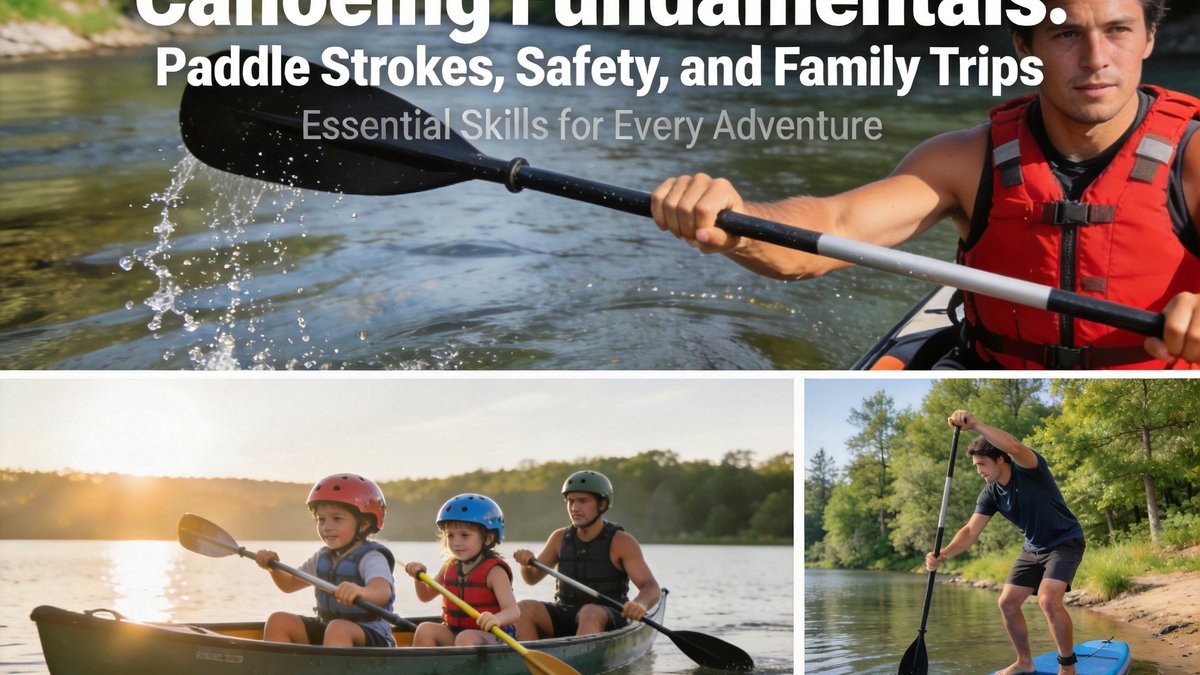
Canoeing offers families a wonderful way to explore waterways together. Learning proper technique and safety fundamentals makes every trip more enjoyable.
Canoeing offers families a wonderful way to explore waterways together. Learning proper technique and safety fundamentals makes every trip more enjoyable.
Canoes vary significantly in design based on their intended use. Recreational canoes for flatwater paddling feature wider beams, flat hulls, and stable platforms ideal for families and beginners. These canoes track reasonably well and offer generous capacity for gear. Typical recreational canoes range from 14 to 17 feet in length with capacities of 700-900 pounds.
Touring canoes are designed for efficiency over long distances on open water. They feature longer hulls, sharper entry lines, and narrower beams for better speed and tracking. Touring canoes require more skill to paddle well but cover distance more efficiently. Many touring canoes include keels for improved straight-line performance in wind.
Canoe materials affect weight, durability, and cost. Polyethylene canoes are affordable and durable but heavy at 65-85 pounds. Royalex was the standard whitewater material but production has ceased. Kevlar and carbon fiber canoes weigh 35-55 pounds and offer excellent performance but cost significantly more. Aluminum canoes are durable and affordable but cold, noisy, and heavy.
The forward stroke looks simple but requires proper technique for efficiency. Sit upright with your shoulders relaxed and rotate your torso with each stroke. The paddle blade should enter the water near your toes and exit near your hips. Engage your core rather than relying on arm strength alone. A relaxed grip reduces forearm fatigue during long paddling days.
The J-stroke is the essential correction stroke for solo canoeing. After completing a forward stroke on one side, twist your wrist to turn the paddle blade 90 degrees and push it away from the canoe at the end of the stroke. This creates a J-shaped pattern in the water. The J-stroke counteracts the canoe's natural tendency to turn away from your paddling side.
Draw strokes move the canoe sideways. Reach out perpendicular to the canoe, insert the paddle blade vertically, and pull the water toward the canoe. Draw strokes are essential for docking, maneuvering in tight spaces, and holding position alongside another boat. The pry stroke performs the opposite function, pushing the canoe away from your paddle side.
Capsize recovery is an essential skill for every canoeist. Practice entering a capsized canoe with a partner from a swimming position. In flatwater conditions, you can swim the capsized canoe to shore, drain it, and re-enter. In deeper water, a canoe is difficult to re-enter without assistance. Carry a paddle float or bailer for self-rescue capability.
Weather awareness prevents most serious canoeing incidents. Wind creates the greatest hazard for canoeists because the high freeboard of a canoe catches wind like a sail. When wind exceeds 15 miles per hour, consider postponing your trip or choosing a sheltered route. Thunderstorms develop quickly on summer afternoons. Start your paddling early and plan to be off the water by early afternoon.
Canoe flotation is critical for safety. Canoe manufacturers install flotation blocks in the bow and stern compartments. Ensure these blocks are present and secure before every trip. Flotation prevents the canoe from sinking completely if capsized, making recovery much easier. For additional safety, wear a PFD at all times and carry a throw rope for rescue situations.
Choose family-friendly routes with calm water, short distances, and interesting features. Lakes with islands, wildlife viewing opportunities, and accessible shorelines provide engaging experiences for children. Limit daily paddling distance to 3-5 miles for young children, increasing gradually as they develop paddling skills and endurance.
Pack for comfort and engagement. Bring snacks, drinks, sunscreen, insect repellent, and dry clothing in waterproof dry bags. Provide children with their own child-sized paddle for short paddling sessions where they can feel involved. Water toys, fishing gear, and identification guides for birds and plants keep children engaged during paddling breaks.
Assign roles and responsibilities to make children feel involved. Older children can help with navigation using a map or GPS. Younger children can serve as lookouts for wildlife, obstacles, and landmarks. Rotate positions in the canoe during breaks so everyone experiences different perspectives and paddling responsibilities.
Canoe camping combines paddling with overnight camping, offering families immersive outdoor experiences without backpacking weight constraints. Canoes carry significantly more gear than backpacking, allowing for comfortable camp setups, fresh food, and recreational equipment. Limit daily paddling distances to 5-8 miles to allow time for camp setup and exploration.
Gear organization is essential for canoe camping. Use color-coded dry bags for different categories: green for shelter, blue for cooking, red for clothing, yellow for miscellaneous. Pack heavy items low in the canoe for stability. Distribute weight evenly between bow and stern to maintain proper trim. Waterproof everything even if it seems unnecessary.
Plan meals that children will enjoy and can help prepare. Foil packet meals cooked in campfire coals engage children in the cooking process. Pre-made dehydrated meals save weight but may not appeal to picky eaters. Bring familiar comfort foods for the first night when everyone is tired from the travel and paddle to the campsite.
"A canoe is the most versatile human-powered watercraft ever invented. It can carry a family with gear for a week, slip silently through wildlife habitat, and provide a platform for fishing, photography, and contemplation that no motorized boat can match."
"The best family canoe trips are measured not in miles traveled but in memories made. A three-mile paddle with a picnic lunch on a hidden beach creates more lasting family bonds than any ambitious expedition."
A 17-foot recreational canoe with a wide beam provides enough capacity for two adults and two children with gear. Look for canoes rated for 800+ pounds capacity. Royalex or polyethylene construction offers durability at a reasonable price. Outfitting the canoe with comfortable seats and backrests improves the paddling experience for all family members.
Start with simple instruction on flat, calm water. Demonstrate each stroke on land before trying it on water. Let children paddle from the bow position where they can follow your rhythm. Keep instruction sessions short and fun. Praise effort rather than technique. Most children develop competent paddling skills naturally through regular practice on family trips.
Mandatory safety gear includes PFDs for every person, a spare paddle, a bailer or pump, a throw rope, and a whistle or other sound-signaling device. Recommended additional gear includes a first aid kit, repair kit for the canoe, spare clothing in a dry bag, navigation tools, sun protection, and a flashlight or headlamp.
Solo canoeing is possible with proper technique. Kneel near the center of the canoe for better balance and control. Use a J-stroke to maintain straight tracking. Solo canoeing requires more skill than tandem paddling but offers independence and quiet wildlife observation opportunities. Start practicing in calm, protected waters before venturing into open areas.
Safety on the water begins before you launch. Always wear a properly fitted personal flotation device, regardless of your swimming ability or water conditions. Check weather forecasts and river flow rates before every trip. File a float plan with someone on shore that includes your route, expected return time, and vehicle details. In cold water conditions, wear appropriate insulation even in warm air temperatures to prevent shock and hypothermia.
Efficient paddling technique reduces fatigue and increases your enjoyment on the water. Engage your core muscles rather than relying solely on arm strength for each stroke. Rotate your torso with each paddle stroke to engage larger muscle groups. Keep your top hand at eye level during forward strokes for optimal leverage. Practice your strokes on flat water before moving to moving water, where good technique becomes essential for safety and control.
Understanding how to read river features keeps you safe and helps you choose the best line through rapids. Look for the V shape where water flows deepest between rocks. Avoid the dark pillow shapes that indicate submerged boulders pushing water upward. Learn to identify eddies behind obstacles where you can rest and scout the next section. In tidal areas, study tide charts and understand how tidal flows affect water levels and current direction throughout the day.
Safety on the water begins before you launch. Always wear a properly fitted personal flotation device, regardless of your swimming ability or water conditions. Check weather forecasts and river flow rates before every trip. File a float plan with someone on shore that includes your route, expected return time, and vehicle details. In cold water conditions, wear appropriate insulation even in warm air temperatures to prevent shock and hypothermia.