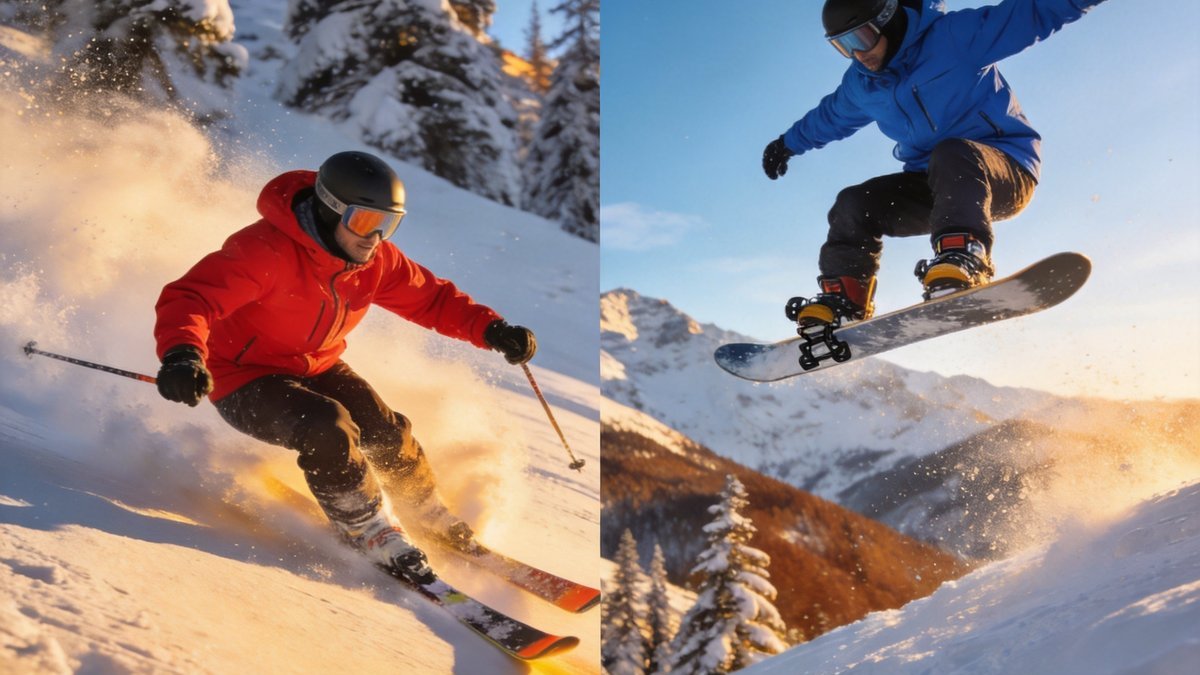
The skiing versus snowboarding debate has no single correct answer. Your choice depends on your personality, athletic background, and what you want from winter sports.
Key Takeaways
- Skiing typically has a gentler initial learning curve. Most beginners can ski parallel turns within a few days of lessons. Snowboarding requires more falls in the first few days before things click.
- Snowboarding offers a more natural side-to-side motion similar to surfing and skateboarding. Skiing uses independent leg movements that feel more like running on snow.
- Both sports require similar gear investments around $500-1,200 for a complete beginner setup or $50-100 per day for rentals.
- Your choice should factor in your local terrain, your friends' preferred sport, and whether you prefer facing downhill or sideways while riding.
Learning Curve Comparison
The learning curve difference between skiing and snowboarding is significant during the first week. Skiing allows beginners to slide on flat terrain and make basic wedge turns within hours. Most ski schools have beginners making controlled turns on gentle slopes by the end of their first day. The natural stance of facing downhill with independent leg movement feels intuitive to many newcomers.
Snowboarding presents a steeper initial learning curve. Beginners spend their first day falling frequently while learning to balance on a single edge. Wrist and tailbone injuries are common during the first few sessions. The learning curve typically requires 3-5 days before snowboarders can link turns confidently on green terrain. However, after the initial breakthrough, snowboarders often progress quickly through intermediate levels.
Your previous athletic experience influences which sport feels more natural. Surfers, skateboarders, and wakeboarders typically adapt to snowboarding more quickly due to the similar side-to-side motion and edge control. Skiers and runners often find skiing more intuitive because of the independent leg movement and forward-facing stance. Gymnasts and dancers may excel at both due to developed body awareness.
Gear and Cost Comparison
Ski equipment includes skis, boots, poles, bindings, and often requires different ski lengths for different terrain types. A complete beginner ski package costs $400-800 for entry-level equipment. Ski boots require precise fitting and affect comfort significantly. Boots that fit poorly can ruin a ski day regardless of ski quality. Rental equipment is widely available and appropriate for beginners.
Snowboard equipment includes the board, boots, and bindings. A complete beginner snowboard package costs $300-700. Snowboard boots are generally more comfortable than ski boots due to softer flex and more natural walking motion. Board selection depends on your weight, height, and riding style. Beginners should choose softer, shorter boards for easier turn initiation and maneuverability.
Daily lift tickets are the largest ongoing cost for both sports. Average lift ticket prices range from $80-200 per day depending on the resort. Season passes from Epic Pass and Ikon Pass provide unlimited access to multiple resorts for $700-1,000. Both sports require the same lift ticket, so cost differences come down to equipment rather than access. Consider season rentals for your first year to minimize upfront investment.
Terrain and Style Differences
Skiers have advantages on certain terrain types. Cross-country skiing and backcountry touring off-piste are exclusively ski activities. Skiers find steep, icy couloirs and mogul fields more manageable due to independent leg movement. Skiing also offers better performance on flat approaches and cat tracks where removing a ski and skating is easier than unstrapping a snowboard.
Snowboarders excel in deep powder where the board's surface area provides natural flotation. Trees and tight chutes between rocks favor snowboarders due to the shorter turning radius and quicker edge-to-edge transitions. Terrain parks and halfpipes are popular with both sports, but snowboarders originated many freestyle tricks that skiers have since adopted.
Chairlift etiquette differs between sports. Snowboarders unstrap their back foot for loading and must skate or hop to the unloading point. Skiers keep both skis on and use poles for maneuvering. Both sports require awareness of other riders in the lift line and at unloading areas. Loading and unloading become automatic with practice but require attention during your first few days.
Physical Demands and Injury Patterns
Skiing places different physical demands on the body than snowboarding. Skiing requires more quadriceps strength for maintaining the athletic position and absorbing bumps. Knee injuries particularly ACL tears are more common in skiing than snowboarding. Upper body strength matters less in skiing than in snowboarding where arm movement aids balance and edge control.
Snowboarding demands more core strength and ankle stability than skiing. Wrist injuries from forward falls are the most common snowboarding injury, making wrist guards a smart investment for beginners. Tailbone injuries from sitting down hard are also common during the learning phase. Snowboarding knee injuries are less common than skiing but ankle and foot injuries occur more frequently.
Cross-training for either sport should focus on leg strength, cardiovascular fitness, and balance. Squats, lunges, and wall sits build skiing endurance. Core exercises including planks and rotational movements benefit snowboarders. Both sports benefit from cardiovascular training including cycling, running, or stair climbing. Start your fitness preparation 6-8 weeks before the season.
Making Your Choice
The best approach for undecided beginners is to try both sports before committing to one. Rent equipment for a day of each sport on consecutive weekends or different days of the same trip. Many resorts offer combined learn-to-ski and learn-to-ride packages that include lessons, rentals, and lift access at reduced prices. Compare how each sport feels after the initial learning period rather than judging by your first hour.
Consider practical factors including your local mountain terrain, your friends' preferred sport, and available lesson programs. Learning with friends who already ski or snowboard accelerates your progress and makes the experience more social. If your local mountain has long flat approaches, skiing may be more practical. If it gets deep powder regularly, snowboarding might be more enjoyable.
Remember that you can switch sports or enjoy both. Many accomplished mountain athletes ski and snowboard at different times depending on conditions, group preferences, and personal mood. Learning both sports makes you a more versatile mountain user and deepens your understanding of snow dynamics and terrain reading.
"The best winter sport is the one that gets you on the mountain consistently. A mediocre day skiing or snowboarding is still infinitely better than a day spent indoors wishing you were on the slopes."
"Do not choose your winter sport based on what looks cool or what your friends do. Choose based on what feels natural to your body and brings you joy. The sport that makes you smile is the right one for you."
Frequently Asked Questions
Which sport is more dangerous, skiing or snowboarding?
Both sports have similar overall injury rates but different injury patterns. Skiers are more prone to knee injuries including ACL tears. Snowboarders experience more wrist, shoulder, and tailbone injuries. Head injuries occur in both sports at similar rates, making helmets essential for everyone regardless of sport choice.
How long does it take to become intermediate in each sport?
Most skiers reach intermediate level able to ski blue runs comfortably within 10-15 days on snow. Snowboarders typically need 15-20 days to reach the same level due to the steeper initial learning curve. Consistent practice, quality instruction, and good fitness accelerate progression in both sports.
Can I switch from skiing to snowboarding or vice versa?
Switching sports is common and many mountain athletes enjoy both. The first few days of the new sport will feel like starting over, but your overall mountain awareness and snow reading skills transfer between sports. Plan a dedicated lesson for your first day of the new sport to establish proper fundamentals.
What age is best to start each sport?
Children as young as 3-4 can start skiing with appropriate equipment and instruction. Snowboarding is typically introduced at age 6-7 when children have better balance and core strength. Adults can start either sport at any age with proper instruction and realistic expectations about progression speed.