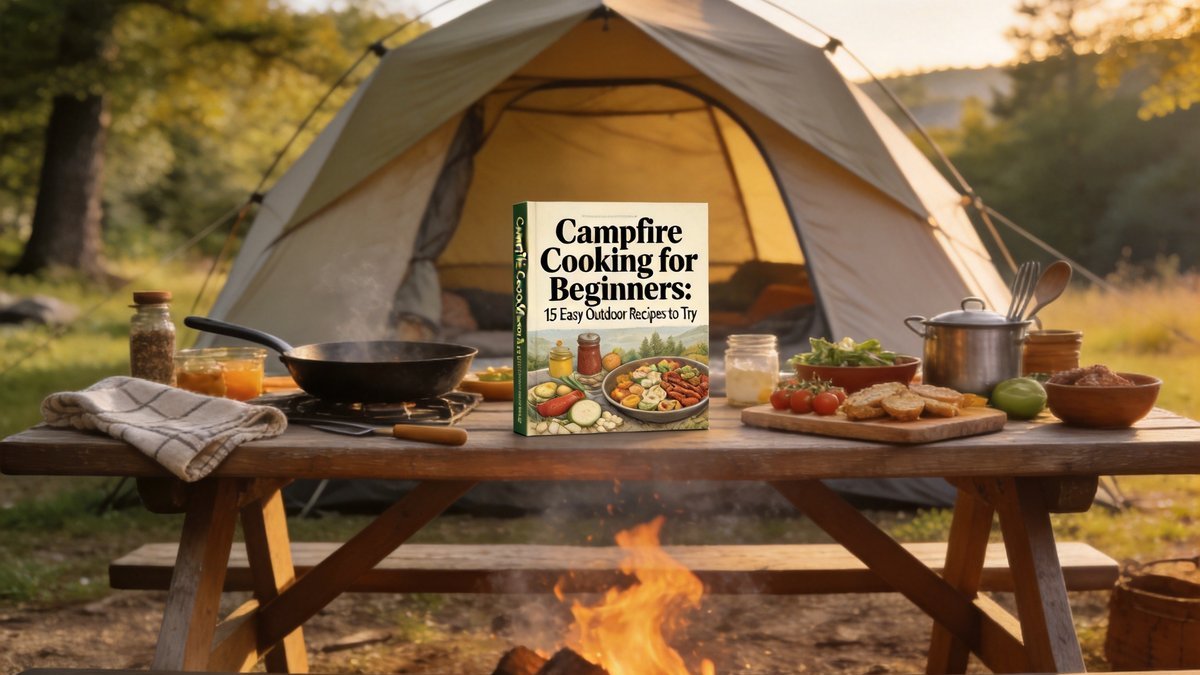
Campfire cooking connects you to a tradition as old as humanity itself. There is something deeply satisfying about preparing a meal over an open fire, with smoke rising through the trees and the sounds of the forest around you. Beginners often feel intimidated by campfire cooking, but with the right techniques and a few simple recipes, anyone can prepare delicious meals outdoors.
Key Takeaways
- Cook over hot coals, not open flames. Coals provide steady, controllable heat while flames char food unevenly.
- Prepare ingredients at home. Pre-chopped vegetables and pre-marinated meat transform camp cooking from chore to pleasure.
- A cast iron Dutch oven is the most versatile campfire cooking vessel you can own.
- Foil packets simplify cooking and cleanup. They work for vegetables, fish, chicken, and potatoes with infinite variations.
Essential Campfire Cooking Gear
Building a successful camp kitchen starts with the right tools. A cast iron Dutch oven stands as the most versatile campfire cooking vessel, handling everything from stews and chili to bread and cobblers. Cast iron distributes heat evenly and retains temperature well, though it weighs significantly. A lightweight camp stove complements your fire cooking for mornings when you want quick coffee without building a fire. Long-handled utensils including spatulas, tongs, and ladles keep your hands safely away from flames and hot coals. Heavy-duty aluminum foil ranks as the unsung hero of camp cooking. Foil packets simplify cooking and cleanup for vegetables, fish, and potatoes. Pack heat-resistant gloves or pot holders rated for high temperatures.
Fire Management for Cooking
Cooking over a campfire differs fundamentally from cooking on a stove. The key distinction is coals versus flames. Direct flames char food and create uneven cooking, while hot coals provide steady, controllable heat for most cooking methods. Build your fire at least 30 minutes before you plan to cook, allowing wood to burn down to a bed of glowing coals. Create temperature zones by managing coal depth. A deep bed of coals provides high heat for searing and boiling. A thin layer of coals spread wide offers lower heat for simmering and baking. Rake coals to one side for a two-zone cooking setup, leaving a hotter side for boiling and a cooler side for keeping food warm.
Breakfast Recipes for the Campfire
Campfire breakfasts set the tone for the entire day. Foil packet breakfast scrambles rank among the easiest and most satisfying options. Layer pre-cooked sausage or bacon crumbles, shredded potatoes, bell peppers, onions, and beaten eggs on a large sheet of heavy-duty foil. Fold into a sealed packet and cook over medium coals for 10 to 15 minutes, flipping halfway. Dutch oven breakfast casseroles layer frozen hash browns, scrambled eggs, cheese, and pre-cooked breakfast meat in a greased Dutch oven. Nestle the pot in a ring of coals and pile coals on the lid. Cook for 25 to 30 minutes, rotating the pot every 10 minutes for even heating.
Dinner and Dessert Recipes
Foil packet dinners offer infinite variety with minimal cleanup. Try lemon herb salmon with asparagus and cherry tomatoes, or classic sausage and pepper packets with potatoes and onions. Each packet cooks in 15 to 20 minutes over medium coals. Campfire chili starts with browning ground beef or turkey in a Dutch oven, then adding canned tomatoes, beans, chili powder, cumin, and garlic. Let it simmer over medium coals for 30 to 45 minutes, stirring occasionally. For dessert, classic campfire bananas score a banana lengthwise through the peel, stuff with chocolate chips and mini marshmallows, wrap in foil, and cook for 5 to 7 minutes until the chocolate melts.
The difference between a good camp cook and a great one is patience. Campfire cooking takes twice as long as your kitchen stove. The coals are cooler, the heat is less consistent, and the variables multiply. Accept this upfront and you will never serve burnt food to hungry campers again.
Prep at home, cook at camp. Chopping vegetables, marinating meat, and measuring dry ingredients before you leave transforms campfire cooking from a stressful chore into a relaxing camp activity. Your future self will thank you.
Frequently Asked Questions
Can I use regular cookware over a campfire?
Regular cookware with plastic handles or thin bottoms will likely be damaged by campfire heat. Cast iron, stainless steel, and titanium cookware designed for high heat are better choices. If you must use regular pots, keep them away from direct flames and use a grate to raise them above the coals.
How do I clean campfire cookware without running water?
Scrape food residue with a spatula or wooden spoon. Wipe with a paper towel or cloth. For stubborn residue, boil a small amount of water in the pot and scrape with a wooden spoon. Avoid using soap on cast iron as it absorbs into the seasoning. Pack out all food waste and gray water.
What woods are best for campfire cooking?
Hardwoods like oak, hickory, maple, and ash produce the best cooking coals with steady heat and pleasant smoke flavor. Avoid softwoods like pine, fir, and cedar that produce excessive smoke with unpleasant resin flavors that transfer to food. Never use pressure-treated wood, which releases toxic chemicals when burned.
How do I control temperature without a thermometer?
The hand test works well: hold your palm about 6 inches above the cooking surface. If you need to pull away within 2 seconds, it is high heat. Within 4 seconds is medium heat. Within 6 seconds is low heat. Adjust by raising or lowering the cooking surface, or by adding or spreading coals.