Table of Contents
Ice climbing transforms frozen waterfalls and alpine ice into vertical playgrounds. Starting with proper instruction and gear makes the experience safe and exhilarating.
Jordan Myers
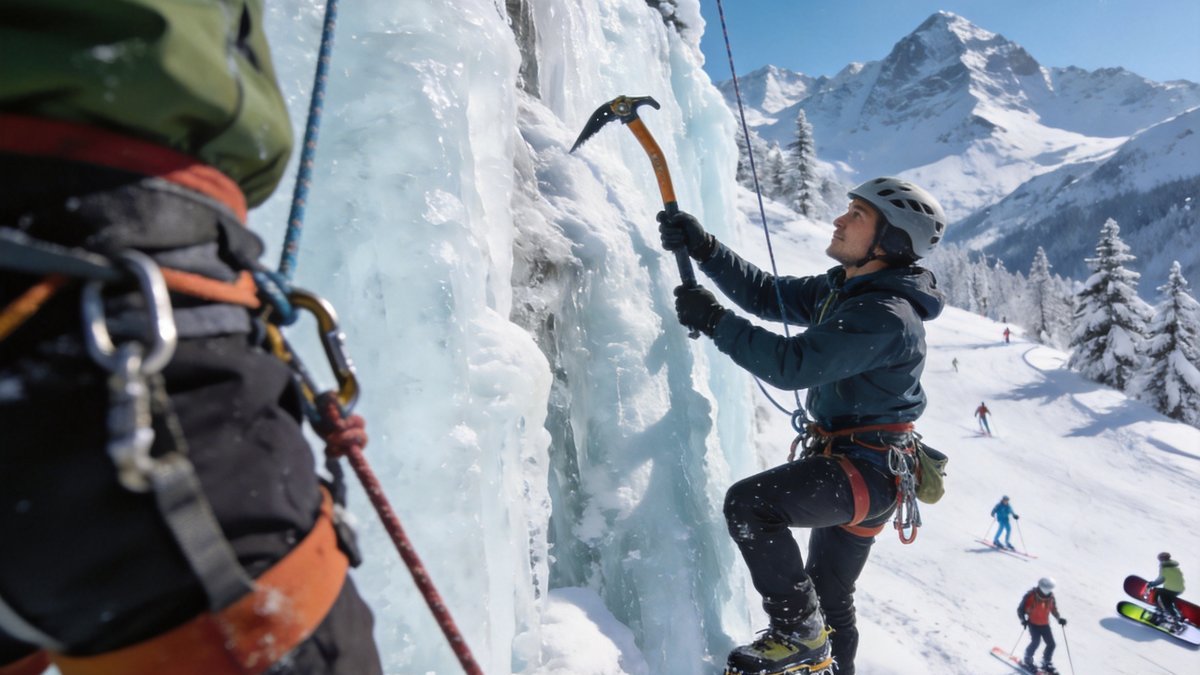
Ice climbing transforms frozen waterfalls and alpine ice into vertical playgrounds. Starting with proper instruction and gear makes the experience safe and exhilarating.
Ice climbing transforms frozen waterfalls and alpine ice into vertical playgrounds. Starting with proper instruction and gear makes the experience safe and exhilarating.
Ice climbing boots are the foundation of your gear system. Plastic or insulated leather boots with stiff soles provide support for crampons and warmth for extended periods standing on ice. Boots rated for alpine climbing with compatible toe and heel welts for modern crampon bindings are essential. Boot fitting is critical as poorly fitted boots cause cold feet and reduce climbing performance.
Crampons for ice climbing feature horizontal front points that bite into vertical ice. Twelve-point crampons with adjustable binding systems fit most modern climbing boots. The front points must be sharp for secure placements. Secondary points provide stability on ice and snow. Crampons should fit snugly without interfering with boot flex or creating pressure points.
Ice tools or ice axes have evolved from basic alpine tools to technical implements with curved shafts, ergonomic grips, and interchangeable picks. Modern ice tools feature leashless designs that allow quick hand placement changes. Pick options include standard ice picks for general climbing, mixed picks for rock and ice, and match picks for competition climbing. Tool selection depends on climbing style and ice conditions.
Ice screws are the primary protection for ice climbing. Modern screws feature hollow tubes with cutting teeth at one end and a hanger at the other. Screw lengths range from 10 to 22 centimeters with longer screws providing better holding power in good ice. Place screws at least 6 inches from the edge of the ice shelf and angled slightly upward for optimal holding power.
Screw placement technique determines protection reliability. Clear any loose surface ice before starting the screw. Start the screw at a slight upward angle, applying steady inward pressure while rotating. Screws should be fully buried with only the hanger visible for maximum strength. Avoid placing screws in hollow-sounding ice, direct sunlight softened ice, or ice with visible cracks.
Ice anchor systems typically use two or three ice screws connected with equalized slings. V-thread anchors provide a clean anchor system using two holes drilled at an angle to intersect inside the ice. Thread accessory cord through the holes and tie off to create a webbing anchor. V-threads leave no hardware behind and provide reliable anchors for rappelling.
The French technique uses flat-footed crampon placements for low-angle ice and snow climbs. Keep your feet flat on the ice with all crampon points contacting the surface. This technique is efficient on moderate terrain but inadequate for steep ice where front-pointing becomes necessary.
Front-pointing engages the front two points of your crampons into the ice. Kick your front points into the ice with enough force to create a secure platform. Your feet should be shoulder-width apart with knees slightly bent. Good front-point technique requires precise kicking: too hard and you waste energy, too soft and the points fail to penetrate sufficiently.
Ice tool placement follows a similar philosophy to crampon use. Swing the ice tool in a smooth arc, letting the pick's weight and momentum do the work. A properly placed pick sinks cleanly into the ice without shattering it. Listen for the solid thunk of good placement versus the crack of shattered ice. Place tools above your head, pulling down to test the placement before weighting it fully.
Ice quality determines climbing difficulty and safety. Good ice is clear, dense, and free of air bubbles, cracks, and rock debris. Blue or green ice typically indicates dense, strong ice. White or opaque ice contains air bubbles that weaken its structure. Candle ice with vertical crystal formations is weak and unpredictable. Learn to assess ice quality visually and by tapping with your ice tool.
Temperature affects ice conditions throughout the day. Cold temperatures produce harder, more brittle ice that requires sharper picks and more precise technique. Warm temperatures soften ice, making tool and crampon placement easier but increasing the risk of ice failure and falling ice. The freeze-thaw cycle creates the best climbing conditions: cold nights freeze the ice solid, while daytime warming softens the surface for secure placements.
Sun exposure significantly impacts ice quality. Ice in direct sunlight softens faster and may become unsafe by midday. North-facing ice retains cold conditions longer. South-facing ice may deteriorate rapidly as the day warms. Plan your climb based on sun exposure, starting shaded routes early and allowing sunny routes to freeze overnight before climbing them.
Ice climbing demands robust safety systems and conservative risk management. Always climb with a partner and maintain clear communication. Establish solid anchors before every pitch. Carry multiple ice screws and know how to place them quickly in an emergency. Practice ice screw placement at the base before committing to steep terrain.
Falling ice is a significant hazard in ice climbing. The leader may dislodge ice while climbing, and the second may knock ice free while cleaning. Helmets are mandatory for both climbers. Position yourself to avoid being directly below the leader. Clear loose ice before climbing and call out Ice when debris falls.
Weather monitoring is critical for ice climbing safety. Rising temperatures, precipitation, and wind affect ice stability and climbing conditions. Abort the climb if conditions deteriorate. Frozen waterfalls can collapse without warning during warm periods. Research route conditions from recent climbers before heading out.
"Ice climbing teaches patience and respect for conditions you cannot control. The ice decides when it is safe to climb, not your schedule or ambition. Learning to walk away from unsafe ice is the most important skill in an ice climber's repertoire."
"Every swing of the tool and kick of the crampon is a conversation with the ice. Listen to what the ice tells you through your tools. Good ice speaks with a solid thunk. Bad ice cracks and shatters. Heed the difference."
Start by taking an introductory ice climbing course from a certified guide or climbing school. These courses cover gear selection, basic technique, ice screw placement, and safety systems. After the course, practice at established ice climbing venues with experienced partners before attempting new routes. Many climbing gyms offer indoor ice climbing walls for technique practice.
Ice climbing season typically runs from December through March in North America, with peak conditions in January and February. Higher elevation areas may have longer seasons starting in November and extending through April. Local conditions vary based on weather patterns and geographic factors.
Ice climbing carries higher objective risk than rock climbing due to the variable nature of ice, falling ice hazards, and cold environmental conditions. Ice screw protection is less reliable than rock protection. However, with proper training, equipment, and conservative decision-making, ice climbing risks can be managed to acceptable levels.
Most ice climbers find temperatures between 15 and 30 degrees Fahrenheit ideal. Below zero Fahrenheit, gear performance degrades, hands and feet become difficult to keep warm, and ice becomes extremely brittle. Above freezing, ice softens and becomes increasingly unstable. Climb early in cold conditions and plan to be off the ice before significant warming occurs.
Endurance climbing differs significantly from bouldering power. To build route-climbing endurance, focus on climbing three to four times per week with extended sessions on auto-belay or top rope. Practice techniques like pace breathing, resting on holds, and reading sequences before committing to moves. Many intermediate climbers find that climbing with a partner on longer routes improves their endurance faster than any training regimen.
Moving from indoor climbing to outdoor rock requires learning several new skills. Outdoor routes lack the obvious colored holds of gym climbing, so you must read the rock for features like edges, crimps, and jugs. Route finding becomes a critical skill, as identifying the correct line up a cliff face requires practice. Start on well-traveled sport climbs with visible bolt placements before progressing to trad climbing where you place your own protection.
Climbing challenges both physical abilities and mental fortitude. Develop pre-climb routines that help you focus and manage fear. Breathing exercises, visualization of the route, and positive self-talk all contribute to better climbing performance. Accept that falling is part of the learning process and practice falling safely in a controlled environment before pushing your limits on lead climbs outdoors.