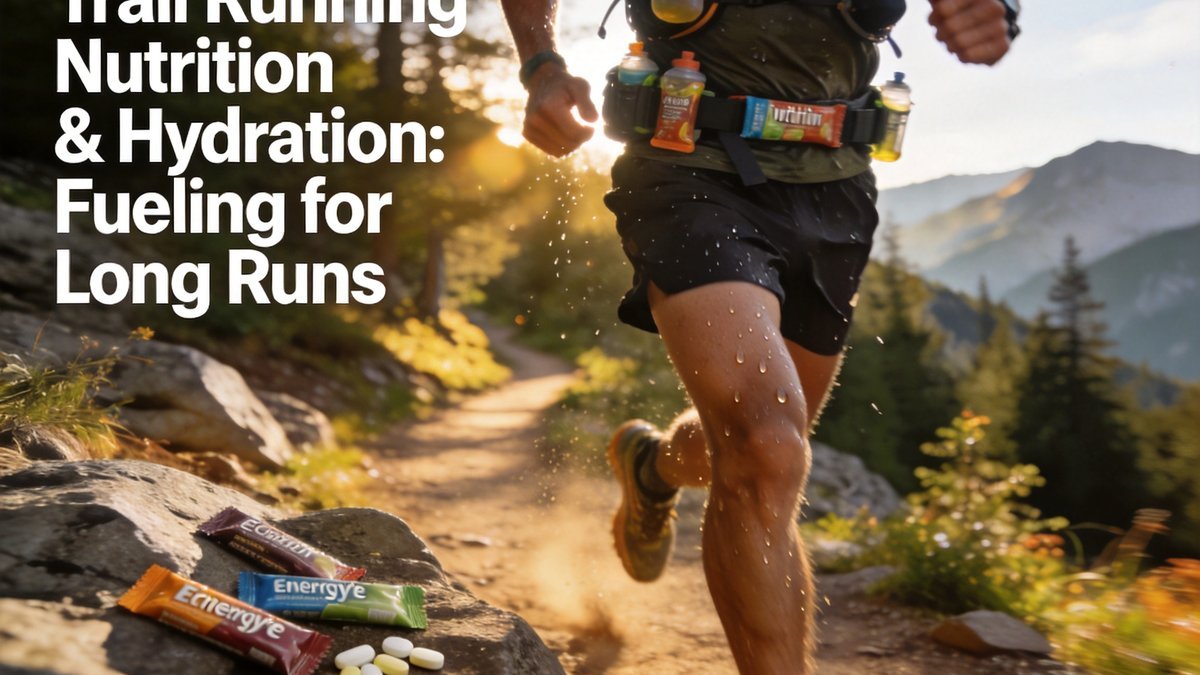
Trail running nutrition and hydration guide covering pre-run meals, on-trail fueling, electrolyte balance, and recovery strategies for long distance runs.
Why Nutrition Matters More on the Trail
Trail running demands more energy than road running at the same pace due to uneven terrain, elevation changes, and the stabilizing work your body performs with every step. A typical trail run burns 10-20% more calories per mile than a road run at equivalent effort. Proper nutrition and hydration are not optional extras. They are essential components of successful trail running, especially for runs lasting over 90 minutes.
The consequences of poor fueling on the trail are more severe than on roads. If you bonk (hit glycogen depletion) on a trail run, you may be miles from the trailhead with challenging terrain still ahead. Carrying appropriate fuel and knowing when to consume it is a fundamental trail running skill that separates experienced runners from beginners.
On long trail runs, eating is not optional. It is a performance requirement. By the time you feel hungry, your performance has already dropped significantly. Set a timer if you need to. Eat before you think you need to.
Pre-Run Nutrition Strategies
Your pre-run meal sets the foundation for performance. For morning runs, eat 1.5-2 hours before starting, focusing on easily digestible carbohydrates with moderate protein and minimal fat. Oatmeal with banana, a bagel with peanut butter, or rice cakes with honey provide sustained energy without digestive distress. Aim for 300-500 calories depending on run duration.
Hydration before the run is equally important. Drink 16-20 ounces of water in the hour before your run, and consider adding electrolytes if you are a salty sweater or running in hot conditions. Avoid heavy, fatty, or high-fiber foods that can cause gastrointestinal issues once running begins.
On-Trail Fueling Strategies
For runs under 90 minutes, water alone may suffice, but for longer efforts, you need both carbohydrates and electrolytes. The general guideline is 30-60 grams of carbohydrates per hour for runs lasting 1-3 hours, increasing to 60-90 grams per hour for ultra-distance efforts. Gels, chews, and sports drinks provide quickly absorbed carbohydrates.
Real food options work well for many trail runners. Peanut butter sandwiches cut into small squares, dried fruit, dates stuffed with almond butter, and boiled potatoes with salt offer calorie density without expensive sports nutrition products. Experiment during training runs to find what your stomach tolerates.
Your gut can be trained just like your legs. Practice your fueling strategy during training runs rather than trying new foods on race day. The stomach adapts to processing carbohydrates during exercise, but it needs consistent practice to build that tolerance.
Hydration on the Trail
Carry enough water for expected conditions plus a safety margin. A general guideline is 16-24 ounces per hour in moderate conditions, increasing significantly in heat. Use a hydration vest with a bladder and soft flasks for easy access without stopping. Know where water sources exist on your route and carry a lightweight filter for remote trails.
Electrolyte Management
Electrolyte imbalance causes muscle cramps, fatigue, nausea, and in severe cases, hyponatremia. Sodium is the most critical electrolyte to replace during trail runs, as it is lost in the highest concentration through sweat. Electrolyte tablets, powders, or capsules can be added to your water. Salty snacks like pretzels help maintain sodium levels.
Individual sweat rates and electrolyte loss vary significantly. A simple sweat test can help you determine your needs: weigh yourself before and after a one-hour run without consuming fluids. Each pound lost equals approximately 24 ounces of fluid deficit. The saltier your sweat tastes and the more salt residue you see on your clothes, the more sodium you need to replace.
Post-Run Recovery Nutrition
The recovery window after a trail run is your opportunity to rebuild glycogen stores and repair muscle tissue. Consume a combination of carbohydrates and protein within 30-60 minutes after finishing. A 3:1 or 4:1 ratio of carbs to protein is ideal for recovery. Chocolate milk, a protein shake with banana, or a recovery drink mix all work well.
Rehydration after the run deserves equal attention. Weigh yourself before and after long runs to estimate fluid loss and drink 24 ounces of water for each pound lost. Adding electrolytes to your recovery drink helps restore balance. A balanced meal within two hours of finishing provides the nutrients needed for effective recovery.
On California's iconic Lost Coast Trail, the 24.6-mile stretch from Mattole Beach to Black Sands Beach offers no resupply points and limited shade, making self-supported fueling absolutely critical. Runners tackling this rugged segment should carry at least three 500-milliliter soft flasks in a hydration vest like the Ultimate Direction Ultra Vesta, plus a Katadyn BeFree 0.6-liter filter for creek crossings. The remote nature of trails like the Lost Coast means that a bonk can become a safety incident, so packing 800 to 1,000 calories in a mix of GU Roctane gels, Skratch Labs chews, and homemade rice cakes with salt and honey provides both immediate and sustained energy. Pre-hydrating with 20 ounces of water and one Nuun Sport tablet 90 minutes before the start helps offset the coastal winds that accelerate dehydration without triggering thirst.
For runners training on the Appalachian Trail's section through the White Mountains of New Hampshire, the 4.5-mile ascent up Mount Lafayette via the Falling Waters Trail demands a precise fueling schedule to avoid bonking above treeline. Consuming 45 grams of carbohydrates every 45 minutes—roughly one Clif Blok Shot or half a Honey Stinger Waffle—maintains blood glucose levels during the 3,800-foot climb. Electrolyte needs spike in this humid environment, where sweat rates can exceed 32 ounces per hour; adding two SaltStick FastChews per hour prevents the calf cramps that plague runners on technical descents. The exposed ridge between Mount Lincoln and Little Haystack offers no shelter, so carrying a 500-milliliter flask of plain water plus a second flask with Tailwind Nutrition Endurance Fuel ensures both hydration and calorie intake without stopping to mix powders.
Post-run recovery on trails like the 13.5-mile Rim-to-Rim loop at Oregon's Crater Lake National Park requires immediate attention to refueling after sustained elevation changes totaling 4,200 feet of gain. A recovery shake containing 30 grams of protein and 60 grams of carbohydrates—achieved with two scoops of Vega Sport Recovery powder mixed with 12 ounces of oat milk—rebuilds glycogen stores within the critical 30-minute window. Rehydrating with 24 ounces of water per pound lost during the run, verified by a pre- and post-run weigh-in, prevents the headaches and fatigue that follow electrolyte depletion. Adding a banana and a handful of salted almonds to the recovery meal provides potassium and sodium to restore mineral balance after hours of sweating through volcanic pumice dust and dry mountain air.
OntheTahoeRimTrail’s12-milesegmentfromSpoonerSummittoKingsburyGrade,runnersface2,800feetofcumulativeelevationgainacrossexposedgraniteandloosescree.Thesustainedeffortat7,000feetdemandsatailoredfuelingapproach:researchfromtheUniversityofCalifornia’sAltitudeResearchCentershowsthatrunningabove6,000feetincreasescaloricburnby15%duetothebody’sextraworkinoxygen-thinair.Experiencedrunnersonthisrouteoftenpack250-350caloriesperhour,alternatingbetweenGURoctaneEnergyGelsforquickglucoseandSkratchLabsSportDrinkMixforsustainedelectrolytedelivery.Timingiscritical—consumingfuelevery30minutes,ratherthanwaitingforthenextaidstationatthe6-milemark,preventstheenergycrashthatcanturnascenicridgerunintoadangerousslogbacktothetrailhead.
Hydrationontechnicaltrailslikethe10-milePinhotiTrailsegmentthroughAlabama’sTalladegaNationalForestrequiresadual-bottlesystemsuchastheUltimateDirectionUltraVest5.0,whichcarriestwo500-millilitersoftflasks.ThehumidSouthernclimatecausessweatratesofupto1.5litersperhour,yetrunnersoftenunderestimatesodiumlossbecausethesweatdoesn’tevaporatevisibly.ApracticaltechniquelearnedfromultrarunnersonthePinhotiistodroponeelectrolytetablet,likeaNuunSportorSaltStickFastChew,intoeachbottlebeforetherun,thensipevery15minutesregardlessofthirst.Thismaintainsbloodsodiumlevelsabove135millimolesperliter,preventinghyponatremia—aconditionthathassidelinedcompetitorsatthePinhoti100andrequiresmedicalattentionwhenfarfromthetrailhead.
On the rugged singletrack of the Appalachian Trail through Shenandoah National Park, runners often find that carrying a hydration vest like the Salomon Adv Skin 12 with two 500-milliliter soft flasks provides balanced front-loading for easy access on steep climbs. For runs exceeding three hours on technical terrain like the Pemi Loop in New Hampshire's White Mountains, adding a third flask or a 1.5-liter bladder in the rear compartment ensures enough fluid for remote sections without resupply. Many experienced runners pre-cool their water by freezing one flask halfway, allowing for cold sips as the ice melts during the first hour of exertion. This strategy is particularly effective during summer months when ambient temperatures at lower elevations can reach 85 degrees Fahrenheit by mid-morning.
Electrolyte management becomes critical on long runs such as the 28-mile Rim-to-Rim traverse of the Grand Canyon, where runners lose up to two liters of sweat per hour in dry desert conditions. Tailwind Nutrition Endurance Fuel offers a complete solution with 360 milligrams of sodium and 90 milligrams of potassium per serving, eliminating the need for separate salt tablets or chewable capsules. Many ultrarunners on the Western States 100 course swear by mixing one scoop of Skratch Labs Sport Drink Mix per 500 milliliters of water to match sweat sodium concentration and prevent muscle cramping. On particularly hot sections, such as the exposed ridgeline of the Tahoe Rim Trail, supplementing with a salt stick capsule every 45 minutes helps maintain electrolyte balance when humidity is low and sweat rates are high.
For fueling on the move, the Uinta Highline Trail in Utah's Wasatch Range demands efficiency, where packed gels like GU Roctane contain 200 milligrams of sodium and 100 calories per packet for quick absorption without chewing. Many runners transition to real food after the three-hour mark, such as mashed sweet potatoes in reusable squeeze pouches or homemade rice balls seasoned with salt and sesame oil, which provide complex carbohydrates and fat for sustained energy. On the classic 14-mile Skyline Trail in Mount Rainier National Park, carrying a mini BIC lighter and a folded emergency blanket in a dedicated pocket of an Ultimate Direction Ultra Vest adds minimal weight but provides critical safety redundancy. Runners who master these specific nutrition and hydration techniques consistently post faster split times on technical descents and maintain steady effort on sustained climbs above 10,000 feet elevation.