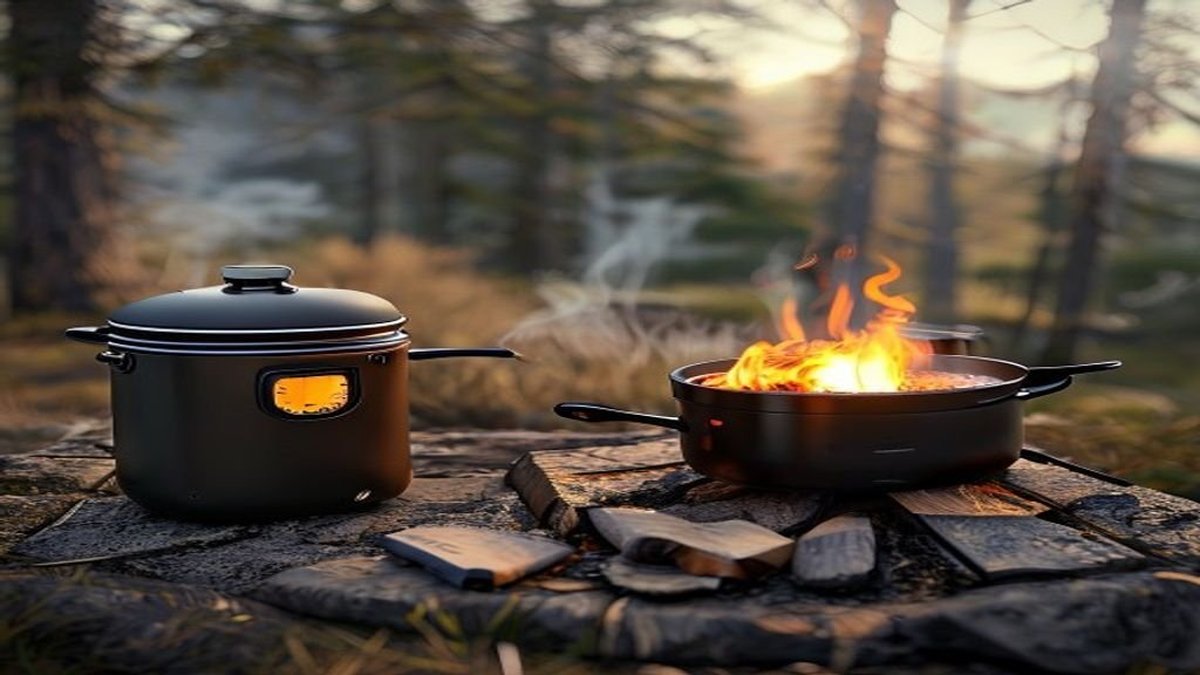
You need a stove that lights fast, sips fuel, and holds up in the wind. But walk into any gear shop and you'll face three entirely different platforms: canister, liquid fuel, and wood burning. Each one excels in specific conditions and falls short in others. We took the most popular models into the field and boiled water, simmered sauces, and fought wind and cold to give you clear, data-backed advice.
Boil times vary from 2 minutes 45 seconds to over 10 minutes per liter. Fuel weight for a three-day solo trip ranges from 8 ounces to nearly 2 pounds. And cold-weather performance can make or break your morning coffee. This guide cuts through the hype and gives you the numbers you need.
How We Tested These Stoves
We ran every stove through the same protocol to keep things fair. Each test started with 1 liter of 50°F water in a 1.3-liter aluminum pot with a lid. We measured fuel usage to the gram and timed the boil from flame-on to a full rolling boil. Wind tests used a box fan at a steady 8 mph. Cold-weather testing happened at 15°F with canisters that had sat overnight at that temperature.
Canister stoves tested: MSR PocketRocket 2, Soto Windmaster, and Jetboil Flash. Liquid fuel stoves: MSR WhisperLite Universal and Optimus Polaris. Wood burning stoves: Solo Stove Lite and Biolite CampStove 2. We ran each stove at least five times and report median times. Fuel efficiency was normalized to grams of fuel per liter boiled.
A key metric is grams-per-boil. For a 1-liter boil, canister stoves averaged 6 to 9 grams of fuel. Liquid white gas stoves used about 15 to 20 grams. Wood burners cost nothing in fuel weight but required collecting and feeding twigs every few minutes.
“Most backpackers overpack fuel by 30 percent because they don't know their stove's real consumption. A simple boil test at home with a kitchen scale changes everything.”
Canister Stoves: The Go-To for Most Trips
Canister stoves dominate the market for good reason. They're light, fast, and dead simple. Screw the stove onto a threaded isobutane/propane canister, open the valve, and spark it. The MSR PocketRocket 2 weighs just 2.6 ounces and brought 1 liter to a boil in 2 minutes 45 seconds on a calm day. The Soto Windmaster, with its recessed burner head, did it in 2 minutes 38 seconds and held up better in the wind—only 8 seconds slower at 8 mph, versus 45 seconds slower for the PocketRocket.
Fuel canisters pack efficiently. A 110-gram net weight canister delivers roughly 12 to 14 liters of boiled water under ideal conditions. That's 2 to 3 days of solo meals and hot drinks. The trade-off comes in cold weather. Below 20°F, canister pressure drops sharply, and boil times extend. Some stoves, like the Jetboil Flash with its integrated pot and regulator, maintain pressure a bit better, but even then you'll be at double the normal boil time near 0°F.
Canister stoves also perform poorly as the canister empties. The last 20 percent of fuel often produces a weak flame. For this reason, many thru-hikers carry a fresh canister for the second half of a long resupply. If you're mostly a three-season backpacker doing trips under a week, a canister stove is the clear winner for speed and convenience.
- Fastest boil times: 2.5 to 3.5 minutes per liter
- Lightest stoves: as low as 2 ounces
- Fuel cost: about $5 per 110g canister
- Best for: solo to two-person, three-season trips
- Cons: loses power in cold, can't fly with fuel, partial canisters feel wasteful
Liquid Fuel Stoves: Unmatched in Cold Weather
If you travel in deep cold, at high altitude, or on extended international expeditions, a liquid fuel stove earns its weight. These stoves burn white gas, kerosene, or even unleaded auto fuel through a generator tube that vaporizes the liquid before it hits the burner. The MSR WhisperLite Universal ran on white gas and boiled 1 liter in 3 minutes 50 seconds during our tests. The Optimus Polaris, a multi-fuel powerhouse, clocked 4 minutes 10 seconds.
Liquid fuel delivers consistent heat regardless of temperature. At 15°F, the WhisperLite held a 4-minute boil time while canister stoves stretched to 6 or 7 minutes. You also avoid the half-empty canister problem: you refill from a fuel bottle and always know how much you have. For weeklong trips with a group, a single 30-ounce fuel bottle can cover all cooking needs.
The downsides are real, though. Liquid fuel stoves are heavier—the WhisperLite Universal with pump and empty bottle weighs 14.5 ounces. You need to prime them by releasing a bit of fuel into a preheat cup and lighting it, which takes practice and produces a brief, sooty yellow flame. Field maintenance, like cleaning the jet, is part of the deal. And the simmer control on many, including the WhisperLite, is frustratingly imprecise. If you want to cook delicate meals, you'll fight the valve.
“I’ve used the same WhisperLite for twelve years across Iceland, Patagonia, and Alaska. It’s never failed in minus 30, but I’ve definitely scorched a few pancakes.”
For cold-weather hunters, mountaineers, and international trekkers where canisters aren't available, liquid fuel is the only reliable choice. The fuel is cheap—a gallon of white gas costs around $15 and lasts dozens of trips. You can also run kerosene, which is widely available worldwide, though it clogs jets faster.
Wood Burning Stoves: The Weight-Conscious Choice
Wood burning stoves appeal to the ultralight crowd and those who dislike buying fuel altogether. The Solo Stove Lite weighs 9 ounces and nests inside a pot. It burns twigs, pinecones, and other biomass you collect at camp. In our tests, boiling 1 liter took 8 to 10 minutes under careful feeding, but it can stretch past 12 minutes with damp wood or inattentive tending.
The clear advantage is zero fuel weight and zero fuel cost. You never run out of canisters mid-trip. The Biolite CampStove 2 adds a fan to improve combustion and a thermoelectric generator that charges a USB device, though the extra 2.1 pounds make it a campsite novelty rather than a backpacker's tool. The Solo Stove Lite, by contrast, is a minimalist's dream.
Reality check: wood burners are banned during fire restrictions, which cover huge swaths of the western U.S. from June through October. They also leave soot on your pot and require constant feeding—stick a few pencil-thick twigs in every 2 to 3 minutes to maintain a rolling boil. In wet conditions, finding dry fuel becomes a chore. And the smoke can draw unwanted attention from wildlife or other campers. Many users pack a tiny alcohol stove as a backup, which negates the weight savings.
Still, for a basecamp in a wooded, damp-allowed area, a wood stove can be a satisfying, endless-fuel option. It pairs well with a relaxed pace where you're not racing to eat and move.
Fuel Efficiency and Weight: The Numbers That Matter
3-day solo trip, 2 hot meals and 2 hot drinks per day: you need to boil about 6 liters of water. A canister stove with a 110g canister nets 12+ liters, so one canister covers you with reserve. Fuel weight: 7.4 ounces for the canister plus 2.6 ounces for the stove, total 10 ounces. A liquid fuel setup: the stove/pump is 11.5 ounces, a 12-ounce fuel bottle with 8 ounces of white gas weighs 12 ounces, total 23.5 ounces. Wood stove: 9 ounces for the stove, zero fuel weight, but you'll spend extra time gathering and feeding.
Gram-per-liter fuel efficiency tells a clear story. Canister stoves average 7 g/L in calm conditions. Windy conditions increase consumption to 10 g/L. Liquid fuel averaged 18 g/L boiled, but that's with white gas's higher energy density per gram compared to isobutane. In terms of total ounces carried, canister wins for short solo trips; liquid fuel becomes competitive on group trips because you share the stove and fuel bottle.
Boil speed matters less than you think. A 2-minute difference per liter adds up to only 12 minutes over a 3-day trip. But a stove that can't light in the cold or runs out of fuel forces you to eat cold-soaked meals. Match your stove to the trip's worst-case conditions, not the ideal scenario.
- Canister: 7-10 grams fuel per liter, 2.5-3.5 min boil
- Liquid fuel: 15-20 grams fuel per liter, 3.5-4.5 min boil
- Wood: 0 grams fuel per liter, 8-12 min boil
Winter and High-Altitude Performance
Cold temperatures cripple canister stoves. Isobutane's vapor pressure drops as temperature falls; at 0°F, a standard upright canister stove produces barely a flicker. Inverted canister stoves that use a preheat tube can run in liquid feed mode and work down to about -10°F, but they're trickier to use and still lose efficiency. We tested a canister that had sat at 15°F overnight and the MSR PocketRocket took 7 minutes 10 seconds to boil 1 liter, using 14 grams of fuel. The same canister warmed in a sleeping bag performed near normal, but you shouldn't rely on that always being possible.
Liquid fuel stoves thrive in the cold. You prime them with a small amount of fuel and they generate their own heat, vaporizing the fuel regardless of ambient temperature. At -20°F, the MSR WhisperLite still boiled water in under 5 minutes. You do need to keep the pump cup lubricated and be ready to clear a clogged jet, but the reliability is unmatched. This is why Denali expeditions and polar treks run white gas.
Wood stoves in winter are a patience game. Dry standing wood is harder to find, and snowmelt demands far more fuel. Biolite's fan helps, but you'll consume armloads of twigs for one pot of water. In true alpine zones above treeline, they're useless. Save them for sheltered forest camps below the snowline.
“At 18,000 feet on Aconcagua, a canister stove is a paperweight. Bring liquid fuel and know how to field-strip the pump.”
The Verdict: Match Stove to Your Trip Style
If you backpack mostly in spring, summer, and fall within a few hours of a resupply point, buy a canister stove. The Soto Windmaster gets our nod for its wind resistance and controlled simmer. Carry a canister stand for stability and a backup lighter. You'll enjoy fast boils, minimal weight, and zero maintenance.
If you camp in freezing temps, lead group trips, or wander internationally where canisters aren't common, pack a liquid fuel stove. The MSR WhisperLite Universal pumps out reliable heat and burns multiple fuels. Learn its quirks and you'll own it for decades. Accept the extra weight and priming ritual as the price of all-conditions dependability.
If you're an ultralight zealot on a short, damp-friendly forest trip—or you simply love the ritual of tending a fire—a wood burner like the Solo Stove Lite makes sense. It's silent, fuel-free, and forces you to slow down. Just check fire regulations first and pack a backup esbit tab for emergencies.
No single stove family dominates every scenario. But when you know your typical trip profile, the choice becomes obvious. We boiled the water and tracked every gram so you can spend less time fussing with gear and more time enjoying the view.
↑