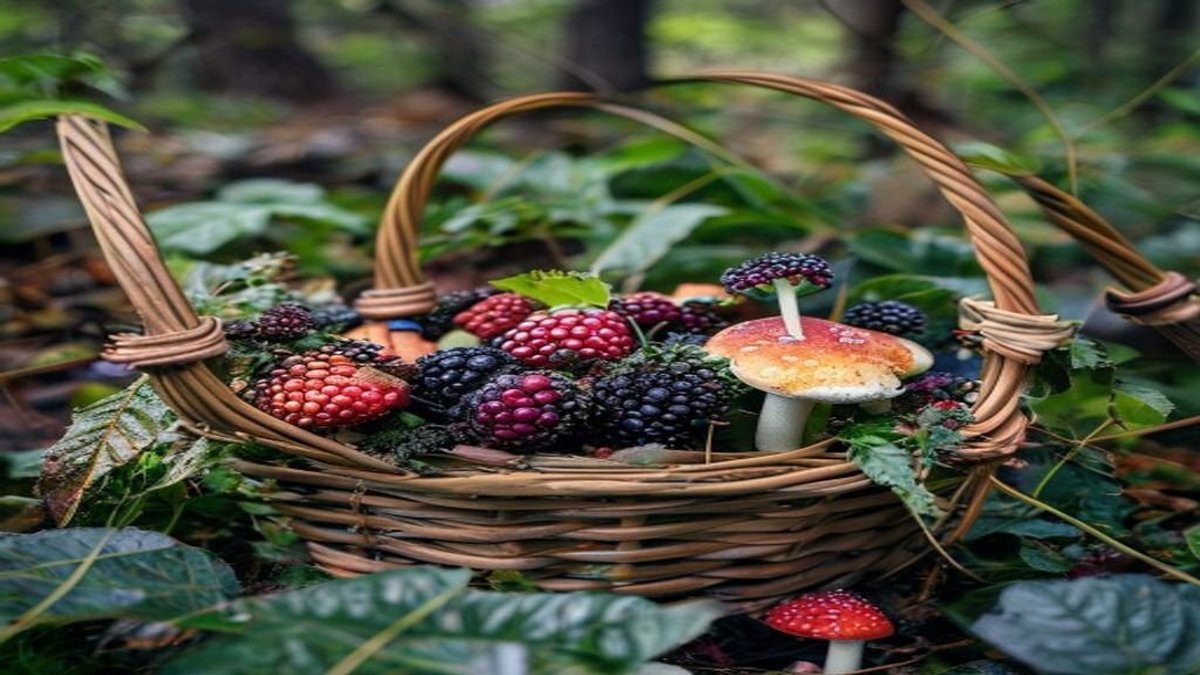
Why Foraging Belongs in Your Camp Kitchen
Adding wild ingredients to camp meals isn't just about saving pack weight. It connects you to the landscape in a way no dehydrated pouch ever will. Fresh greens, tart berries, and fragrant herbs grow within steps of your tent, often bursting with more flavor and nutrients than their grocery store cousins. A single cup of wild dandelion greens, for instance, delivers over 100% of your daily vitamin K and a healthy dose of vitamin A.
But this isn't a hobby to jump into blindly. The National Poison Data System logs thousands of calls each year related to plant and mushroom exposures, many among outdoor enthusiasts. About 15% of those cases require medical treatment. You need a structured approach that respects both the opportunity and the risk. With a few core principles, you can turn a simple campsite into a gourmet kitchen without a trip to the nearest town.
Foraging sharpens your senses like no other camp task. The moment you correctly identify a plant and taste it right there in the woods, you've moved from visitor to participant. Just never let hunger overrule caution.
The Non-Negotiable Rules of Safe Foraging
Before you even look at a berry, stamp these guidelines into your planning. First, you need 100% positive identification. Not "probably," not "looks like the picture." Every part of the plant—leaves, stem, flower, growth pattern—must align with a trusted source. Carry a regional field guide with clear photos, and cross-reference with a second digital resource like a university extension database. Apps can help, but cell service isn't reliable. A study from the Wilderness Medical Society found that more than 60% of plant-related poisonings involved a misidentified species that the victim "thought" was safe.
Second, learn the universal edibility test only as a last-resort survival skill, not a dinner plan. It's time-consuming and doesn't guarantee safety for all plant families. For casual camp foragers, it's far smarter to memorize a short list of unmistakable species. Third, if a plant has milky sap, shiny leaves, or an almond-like scent in its stems, treat those as red flags. Many toxic species share these traits. Finally, always cook or prepare wild foods as recommended. Some edibles are only safe after boiling, drying, or leeching.
- 100% positive ID: Use at least two reliable sources.
- Avoid unknown look-alikes: If there's any doubt, leave it.
- Know your forbidden traits: Milky sap, umbrella-shaped flower clusters, bitter or soapy taste.
- Process correctly: Some plants are toxic raw but edible cooked.
5 Foolproof Wild Edibles for Beginner Campers
Start with these widely distributed, hard-to-mistake plants. They grow across much of North America and Europe in disturbed soils, forest edges, and meadows—exactly where many campsites sit. You'll rarely need to trek far to find them. Each one offers a distinct flavor that elevates campfire cooking without complex preparation.
Dandelion (Taraxacum officinale). Every part is edible. Young leaves are less bitter and fantastic raw in a salad. Roots can be roasted and ground as a coffee substitute. Flowers can be battered and fried. Look for the hairless leaves and single yellow flower head on a hollow stem. There's no toxic look-alike once you learn the leaf shape.
Wood Sorrel (Oxalis spp.). Those clover-like leaves with three heart-shaped leaflets and tiny yellow flowers pack a lemon zing. They're perfect for garnishing fish or brightening a bland trail meal. The oxalic acid content means you shouldn't eat bowlfuls, but as a seasoning, it's superb. Just confirm the leaves are heart-shaped, not pointed, to avoid young clover.
Nettle (Urtica dioica). Yes, it stings. But once you drop it in boiling water for 30 seconds, the stingers are neutralized forever. Nettle is a nutritional powerhouse—seven times more vitamin C than oranges by weight. You get a rich, spinach-like green that works in soups, stews, or as a pot herb. Harvest the top few inches of young plants using gloves.
Wild Strawberry (Fragaria vesca). These tiny berries are a thousand times more flavorful than any store-bought variety. The plant creeps along the ground with three jagged leaflets and white five-petaled flowers. The red fruit is unmistakable, but remember: there's a look-alike called mock strawberry with yellow flowers and a tasteless, seedy berry. Mock strawberry isn't toxic, just disappointing. Look for white petals.
Pineapple Weed (Matricaria discoidea). It looks like chamomile stripped of its petals, growing along trailsides. Crush the flower head and you smell—you guessed it—pineapple. It makes a calming, fruity tea. Just steep the flowers in hot water. There's no dangerous mimic, making it one of the safest kid-friendly foraging finds.
I tell my students to pick three plants and know them inside out—their shape, their season, their habitat. You'll eat better and safer than the person trying to memorize thirty vague descriptions.
Toxic Troublemakers: Plants That Can Ruin Your Trip
Learn these not to harvest, but to avoid with absolute certainty. Some look disturbingly similar to edibles. Others present a danger just by touch. In North America, poison hemlock and water hemlock account for the most severe plant poisonings, often fatal. They're members of the carrot family, like wild carrots (Queen Anne's lace), so the distinction must be precise. Water hemlock's roots have a parsnip-like scent, but a single bite can kill an adult. Look for purple spots on the smooth stem of poison hemlock; Queen Anne's lace has a hairy, solid green stem.
Pokeweed is another common campsite neighbor. Young shoots tempt foragers because old-timers boil them in "poke sallet." One misstep in preparation—or eating the wrong part—and you're in a world of gastrointestinal agony. The mature plant with its magenta stems and dark berries is unmistakably toxic. Even the shoots need multiple changes of boiling water. Safer to skip it entirely.
Mushrooms deserve a separate category. Unless you're with an expert mycologist, do not eat wild mushrooms. None of the rules for plants apply to fungi. Visual identification can fail even experienced hunters, and around 3% of mushroom species are deadly. The death cap alone is responsible for over 90% of mushroom-related fatalities worldwide. The risk-to-reward ratio doesn't pencil out for casual campers.
Harvest With Respect: The Sustainable Forager’s Code
Foraging is not a free-for-all. A patch of wild ramps can take seven years to recover from a heavy harvest. Since you're a camper passing through, your impact should be invisible. Take only what you need for that day's meal, and never more than 5% of any one plant population. If something is rare or you wouldn't feel comfortable explaining your harvest to a ranger, don't pick it.
Know the regulations. Foraging isn't legal everywhere. National parks generally prohibit removing any plant material. National forests and Bureau of Land Management (BLM) lands often allow personal-use harvests of certain fruits, nuts, and mushrooms, but always check the district office's rules. State parks vary wildly. Ignorance can earn you a fine, but it damages trust in the outdoor community and threatens fragile habitats. A quick web search before your trip saves you from being "that camper."
Use proper technique. Cut leaves and stems cleanly with a knife or scissors rather than yanking the whole plant. For berries, gently collect without breaking branches. Leave roots intact unless you're harvesting a root vegetable specifically, and even then, dig back with care and refill the hole. The goal is to help the plant population thrive, not survive your presence.
A good forager walks into the woods like a ghost. Someone who comes after you should see no trace that a meal was taken, only more food for the next season.
Campfire Prep: How to Cook Your Finds Safely
You've confidently identified your wild ingredients. Now cook them. Assume all wild greens and mushrooms must be cooked unless you're absolutely certain they're safe raw—dandelion greens, for instance, or wood sorrel. Cooking neutralizes many mild toxins and reduces the load of bacteria and parasites. At camp, a quick sauté in oil with a bit of salt transforms most greens into a nourishing side dish. More than 70% of edible wild plants taste better with heat and fat.
For berries, a campfire compote is dead simple. Toss a handful of wild strawberries or huckleberries into a pot with a splash of water and a pinch of sugar. Simmer until they break down, then spoon over oatmeal or pancakes. If you're making tea from pine needles or pineapple weed, let the water cool slightly after boiling before pouring it over the plant material—boiling water can leech bitter tannins and destroy delicate aromatic compounds. Steep for 5-10 minutes.
One critical caution: if you're camping in an area with heavy herbicide or pesticide use—common near agricultural land or manicured campgrounds—avoid foraging nearby. Chemicals can't be cooked out. The same goes for plants along busy roads, which accumulate exhaust residue. Give yourself at least 50 feet from any trail edge or roadway. When in doubt, head deeper into the wilderness where the air and soil are cleaner. Your camp kitchen should be the freshest place you eat all year.
↑