Table of Contents
Learn how moon phases impact stargazing visibility. Get expert tips on lunar cycles, best nights for dark skies, and pla...
Jordan Myers
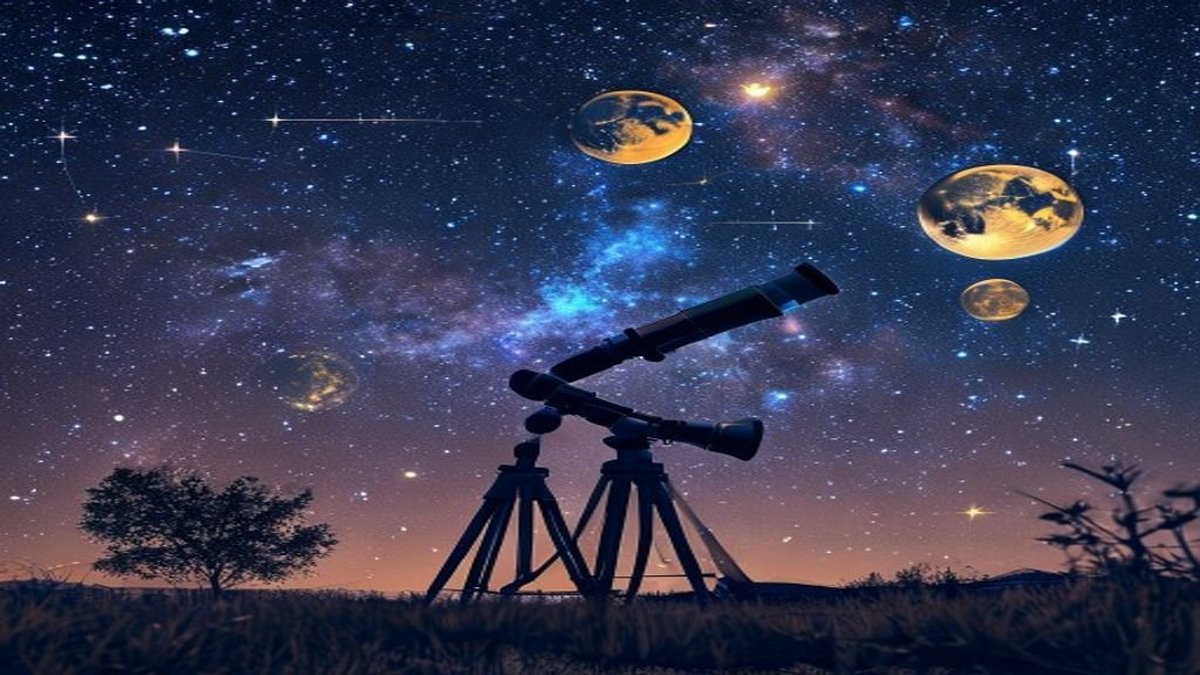
Learn how moon phases impact stargazing visibility. Get expert tips on lunar cycles, best nights for dark skies, and pla...
When you step outside to look at the stars, the moon is probably the last thing you want to see. But its phase determines whether you get a crisp view of the Milky Way or a washed-out sky. A full moon can be 250,000 times brighter than a starry night, drowning out fainter objects with its reflected sunlight.
On the flip side, a new moon means the sky is at its darkest. That gives you the best shot at seeing deep-sky objects like nebulae and distant galaxies. Knowing the lunar cycle isn't just for werewolves; it is your single most powerful tool for planning a successful stargazing session.
The difference between a first-quarter moon and a new moon is the difference between seeing 50 stars and 2,000 stars. If you want to see the Andromeda Galaxy, you need to work with the moon, not against it. — Dr. Elena Vasquez, Astrophysicist and Night Sky Guide
You don't need a telescope to benefit from this knowledge. Even with the naked eye, a dark sky reveals more meteors, satellites, and the soft glow of the zodiacal light. So before you head out, check the phase. It will save you from staring at a washed-out horizon.
The new moon is the gold standard for stargazing. During this phase, the moon is between Earth and the sun, so its illuminated side faces away from us. That means zero lunar light pollution. On a new moon night, the sky can reach a magnitude of 6.5 or darker, depending on your location.
This is the time to hunt for faint objects. The Orion Nebula, the Pleiades, and the Milky Way band all pop with incredible contrast. Even city dwellers can drive 30 minutes to a dark-sky site and see structures they never knew existed. Aim for the three days before and after the new moon for the best results.
One key data point: the night sky is about 10,000 times darker during a new moon than during a full moon. That difference lets your eyes adapt more fully, reaching their maximum light sensitivity after about 20 minutes. Every minute you spend away from phone screens pays off in stellar detail.
Quarter moons offer a sweet spot for beginners. The moon is half-lit, so it sets around midnight or rises around noon. That gives you a few hours of true darkness after the moon goes down. For a first-quarter moon, the best viewing window starts around midnight and runs until dawn.
During these phases, you can still see bright planets like Jupiter and Saturn. The moon itself also looks stunning through binoculars. Its terminator line, the edge between light and dark, shows craters and mountain ranges in sharp relief. You get two shows in one night.
Use this time to practice star-hopping. With a half-lit moon, you can still navigate between bright stars while the moon provides enough light to see your star chart. Just remember that the moon will be up for part of the night, so plan your deep-sky targets for after it sets.
Quarter moons are the most underrated nights for casual stargazing. You get a beautiful moon, bright planets, and a few hours of dark sky. It is the perfect balance for families or anyone new to astronomy. — Mark Chen, Lead Guide at Dark Sky Adventures
A full moon is the worst time for faint deep-sky objects, but it isn't a total loss. The moon itself becomes the main attraction. With binoculars or a small telescope, you can explore its entire face. The maria, or dark plains, and the bright highlands are all visible without filters.
Light pollution from a full moon can reduce visible stars by 90 percent. That means you will only see the brightest stars and planets. However, this is a great time to look at the moon's sunrise and sunset shadows along its terminator. Even a pair of 10x 50 binoculars will show you dozens of craters.
If you are determined to stargaze during a full moon, focus on open star clusters like the Pleiades or the Beehive Cluster. These are bright enough to punch through the lunar glow. Also, try lunar occultations, where the moon passes in front of a star. You can see the star disappear and reappear in real time.
Gibbous moons, between quarter and full, are often overlooked. During a waxing gibbous, the moon is up most of the evening. That leaves only a short window of darkness after midnight. For a waning gibbous, the moon rises late, so you get a dark evening until it appears.
These phases work well for lunar photography. The high-contrast shadows reveal incredible detail along the terminator. You can also track the moon's daily motion. It moves about 13 degrees eastward each night, so you will see different features on consecutive evenings.
One tip: use a moon filter or a simple piece of cardboard with a hole to block the moon's glare while scanning the sky. This trick lets you see fainter stars near the moon without being blinded. Even a partial obstruction can improve your night vision by a full magnitude.
Gibbous phases teach patience. You have to wait for the moon to set, but when it does, the sky opens up. The contrast between the bright moon and the sudden darkness is a photographer's dream. — Sarah Lindstrom, Night Sky Photographer
Check a lunar calendar before you pack your gear. Websites like Time and Date or the US Naval Observatory give you exact moonrise and moonset times for your location. A simple rule: the best stargazing happens when the moon is below the horizon.
Here is a quick checklist for your next outing:
Remember that weather matters too. Even a perfect new moon is useless under clouds. Check clear-sky charts and avoid nights with high humidity. A dry, cool atmosphere gives you sharper views. With a little planning, you can turn any lunar cycle into a rewarding night under the stars.
A successful stargazing session depends heavily on location. Travel away from city lights to areas with darker skies, using light pollution maps available online to find the best spots within driving distance. Higher elevations provide clearer views because there is less atmosphere between you and the stars. Check weather forecasts specifically for cloud cover predictions and atmospheric stability before heading out for a night of observation.
Your eyes need 20 to 30 minutes to fully adapt to darkness, revealing stars and details invisible to the unaided eye under bright conditions. Avoid looking at your phone or any white light during this adaptation period. Use a red flashlight for reading star charts or adjusting equipment, as red light preserves your night vision better than white light. Once dark-adapted, use averted vision by looking slightly to the side of faint objects to see more detail.
The night sky changes with the seasons as Earth orbits the sun. Learn which constellations are visible in each season to plan your stargazing sessions. Winter offers brilliant constellations like Orion and Taurus with the Pleiades cluster. Spring brings Leo and Virgo into view. Summer showcases the Milky Way core and the Summer Triangle. Fall features Andromeda and the Pegasus square. Download a star chart app to help identify what is visible on any given night.
A successful stargazing session depends heavily on location. Travel away from city lights to areas with darker skies, using light pollution maps available online to find the best spots within driving distance. Higher elevations provide clearer views because there is less atmosphere between you and the stars. Check weather forecasts specifically for cloud cover predictions and atmospheric stability before heading out for a night of observation.
Your eyes need 20 to 30 minutes to fully adapt to darkness, revealing stars and details invisible to the unaided eye under bright conditions. Avoid looking at your phone or any white light during this adaptation period. Use a red flashlight for reading star charts or adjusting equipment, as red light preserves your night vision better than white light. Once dark-adapted, use averted vision by looking slightly to the side of faint objects to see more detail.
The night sky changes with the seasons as Earth orbits the sun. Learn which constellations are visible in each season to plan your stargazing sessions. Winter offers brilliant constellations like Orion and Taurus with the Pleiades cluster. Spring brings Leo and Virgo into view. Summer showcases the Milky Way core and the Summer Triangle. Fall features Andromeda and the Pegasus square. Download a star chart app to help identify what is visible on any given night.