Table of Contents
Learn 7 reliable methods to start a fire in the wild, including techniques that work in wet conditions. Master firecraft with ferro rods, bow drills, and modern tools.
Jordan Myers
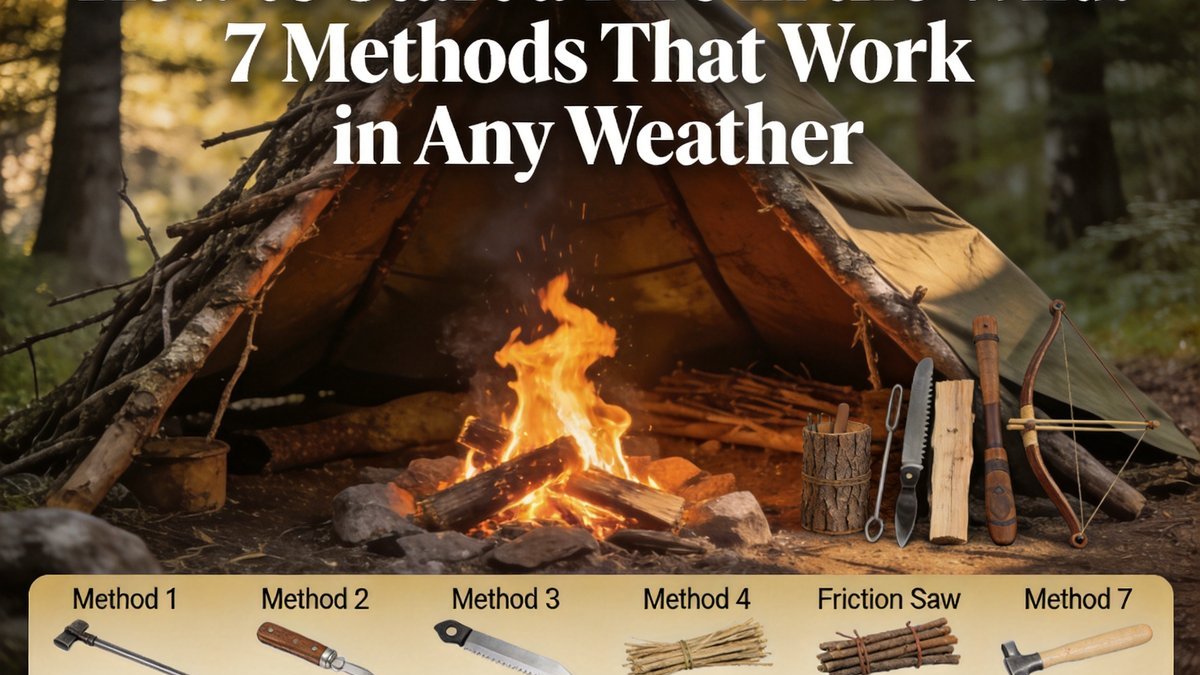
Learn 7 reliable methods to start a fire in the wild, including techniques that work in wet conditions. Master firecraft with ferro rods, bow drills, and modern tools.
Fire is the most versatile survival tool. It provides warmth, purifies water, cooks food, and signals rescuers. Knowing multiple ways to start a fire ensures you can create flame regardless of conditions. These seven methods range from modern convenience to primitive skill.
The disposable butane lighter is the most reliable fire-starting tool ever invented. It provides instant flame in any weather, works at high altitude, and fits in any pocket. A standard Bic lighter provides approximately 3,000 lights. Pack one in your pocket, one in your pack, and one in your emergency kit. Lighters can fail in extreme cold when butane loses pressure. Keep lighters in an inside pocket close to your body in winter. Lighters also become unreliable above 10,000 feet. Despite these limitations, the lighter remains the first choice for fire ignition due to ease of use and reliability.
Waterproof matches provide reliable ignition when stored properly. Commercial versions come sealed in wax protecting the match head from moisture. Create your own by dipping standard matches in melted paraffin wax. Store matches in a waterproof container. Stormproof matches from UCO burn for 15 seconds even in high wind and rain. The limitation of matches is finite supply and vulnerability to crushing. Count matches before each trip and replenish after any use.
A ferro rod produces 3,000-degree sparks when scraped with a sharp edge. Ferro rods work in any weather, at any altitude, and never wear out. A single rod provides thousands of strikes. Scrape sharply down the length of the rod, directing sparks into your tinder bundle. Use the spine of a knife as your striker. Gather fine, dry tinder before striking. The best natural tinder includes dried grass, birch bark, and cattail fluff.
The bow drill creates fire through friction. It requires five components: a curved bow, a spindle carved from dry softwood, a fireboard from the same wood, a bearing block, and a tinder bundle. Material selection is key. Cedar, willow, and cottonwood work well. The wood must be bone dry. Use slow, steady sawing motion, increasing speed as heat builds. When smoke pours from the notch, transfer the ember to your tinder bundle and blow gently into flame.
Additional methods include the magnifying lens, fire piston, and battery-and-steel-wool. Wet-weather fire building requires finding dry wood under fallen logs and inside hollow standing trees. Split larger logs to reveal dry inner wood. Build a small platform to keep your fire off wet ground. A candle stub in the center provides sustained heat to dry out damp fuel.
Fire building is 90 percent preparation and 10 percent ignition. Gather three times as much tinder and kindling as you think you need and keep it dry under your shelter before striking your first spark.
Build your fire before you need it. Once hypothermia sets in or darkness falls, your fine motor skills deteriorate. The fire you build at 4 PM may save your life at midnight.
Different fire structures serve different purposes. The teepee structure leans kindling against each other in a cone shape with tinder in the center. It lights easily and burns upward quickly, making it ideal for a fast warming fire or cooking fire. The log cabin structure stacks fuel in alternating perpendicular layers. It burns longer and more steadily than a teepee, producing a good bed of coals for cooking. The lean-to structure places a long log as a windbreak with kindling leaning against it. This works well in windy conditions where other structures would blow out.
The star fire lays logs end-to-end like spokes of a wheel with the center burning. Push logs inward to increase the fire or pull them back to reduce it. This method uses fuel efficiently and requires less reworking than other structures. The Dakota fire hole is a small hole with an air tunnel dug beside it, directing oxygen to the fire base. It burns efficiently with minimal fuel, produces less smoke, and leaves almost no visible fire at night, making it ideal for stealth camping or areas with limited wood. Choose your fire structure based on your specific needs rather than defaulting to a teepee every time.
Fire safety is critical in all wilderness settings. Before building any fire, check current fire restrictions and regulations. During dry seasons, many public lands prohibit campfires entirely. Use established fire rings where available to concentrate impact. Keep your fire small. A small fire produces enough heat for cooking and warmth while being easier to control and extinguish. Clear a 10-foot diameter area around the fire of all flammable material, including dry grass and pine needles that can ignite from sparks. Never leave a fire unattended for any reason.
Extinguish fires completely before leaving or sleeping. Douse with water, stir the ashes, and repeat until no hissing sounds remain and the ashes are cool to touch. The cold-test method: hold your bare hand 2 inches above the ashes. If you feel any warmth, the fire is not completely out. Scatter cool ashes over a wide area away from camp. Pack out any unburned trash, including pull tabs from fuel cans, foil packaging, and melted plastic. Remember that fire scars persist for years. A responsible camper leaves no trace of their fire beyond the ashes scattered into the forest floor.
Finding natural tinder is an essential fire-starting skill. Birch bark contains natural oils that ignite easily even when damp, making it one of the best natural tinder materials in northern forests. Peel thin layers from dead, fallen birch trees rather than harvesting from live trees. Fatwood, the resin-impregnated heartwood of pine stumps, splits into thin shavings that catch a spark readily and burn hot. Look for fatwood at the base of dead pine trees where branches once connected to the trunk. Cattail fluff from mature cattail heads ignites instantly from a single spark but burns through in seconds, so pair it with progressively larger kindling.
Other natural tinder options require preparation but work reliably. Shave thin, feathery curls from the inside of dry sticks to create a bird's nest of fine wood shavings. Dry grass and pine needles work when bone dry but absorb moisture quickly, so gather them on sunny days and store in a waterproof container. Cactus punky wood, found in dead saguaro or cholla, ignites easily and burns slowly. In desert environments, dried yucca stalks and palm fronds provide excellent tinder. Whatever material you use, process it into fine, fluffy pieces before attempting to ignite, as large pieces require more heat than a ferro rod strike or lighter flame can provide.
Commercial fire starters like Wet Fire or petroleum jelly-coated cotton balls burn for several minutes even when wet. Birch bark contains flammable oils that ignite when wet. Carry commercial tinder as backup.
Build in a natural windbreak or dig a shallow pit. Use rocks to create a wind wall. Build a teepee structure that provides its own wind protection while allowing airflow.
No. Check current fire restrictions. Many areas prohibit fires during dry seasons. Use established fire rings where available.
Douse with water, stir ashes, and douse again until no hissing sounds remain and ashes are cool to touch. Never leave a fire unattended.
A successful stargazing session depends heavily on location. Travel away from city lights to areas with darker skies, using light pollution maps available online to find the best spots within driving distance. Higher elevations provide clearer views because there is less atmosphere between you and the stars. Check weather forecasts specifically for cloud cover predictions and atmospheric stability before heading out for a night of observation.
Your eyes need 20 to 30 minutes to fully adapt to darkness, revealing stars and details invisible to the unaided eye under bright conditions. Avoid looking at your phone or any white light during this adaptation period. Use a red flashlight for reading star charts or adjusting equipment, as red light preserves your night vision better than white light. Once dark-adapted, use averted vision by looking slightly to the side of faint objects to see more detail.
A successful stargazing session depends heavily on location. Travel away from city lights to areas with darker skies, using light pollution maps available online to find the best spots within driving distance. Higher elevations provide clearer views because there is less atmosphere between you and the stars. Check weather forecasts specifically for cloud cover predictions and atmospheric stability before heading out for a night of observation.
Your eyes need 20 to 30 minutes to fully adapt to darkness, revealing stars and details invisible to the unaided eye under bright conditions. Avoid looking at your phone or any white light during this adaptation period. Use a red flashlight for reading star charts or adjusting equipment, as red light preserves your night vision better than white light. Once dark-adapted, use averted vision by looking slightly to the side of faint objects to see more detail.