Table of Contents
Every pound you remove from your pack translates into less fatigue, more miles, and greater enjoyment on the trail.
Jordan Myers
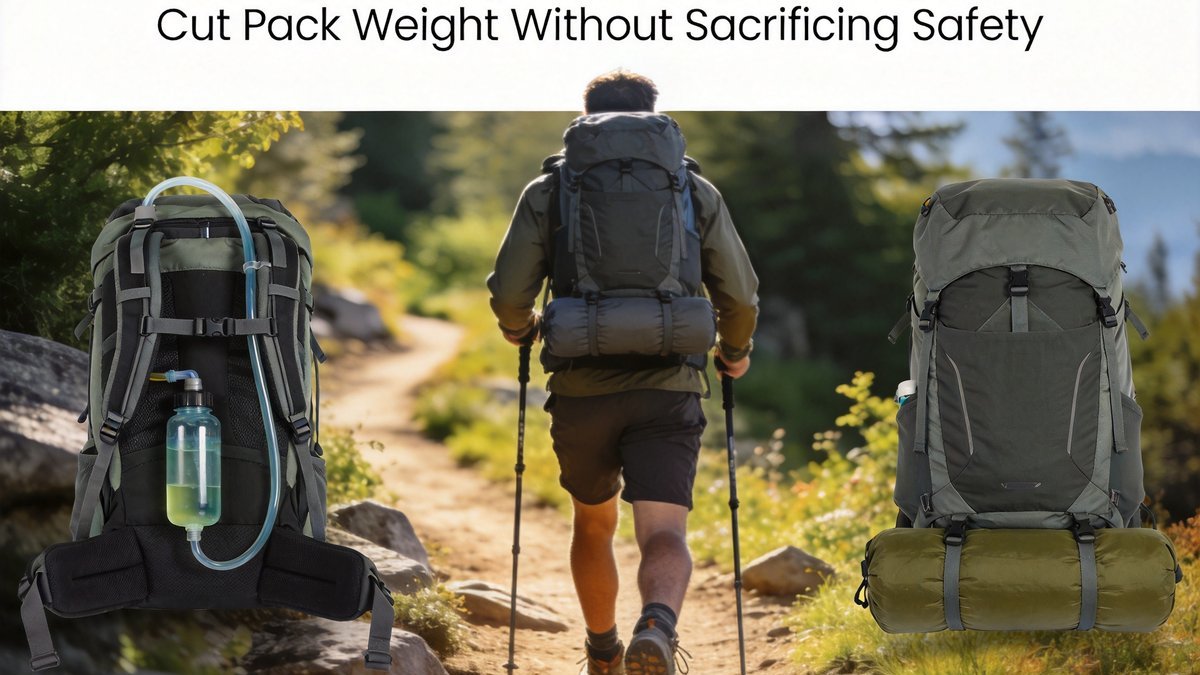
Every pound you remove from your pack translates into less fatigue, more miles, and greater enjoyment on the trail.
Every pound you remove from your pack translates into less fatigue, more miles, and greater enjoyment on the trail.
Backpackers categorize weight in three tiers. Base weight includes everything you carry except consumables like food, water, and fuel. This is the number most lightweight backpackers focus on reducing. Your consumable weight depends on trip duration and cannot vary much. Total weight is the sum of both and represents what you actually carry on your back.
Traditional backpackers carry a base weight of 20-30 pounds. Lightweight backpackers target 10-20 pounds. Ultralight hikers aim for under 10 pounds, and super-ultralight enthusiasts push below 5 pounds. Each tier represents increasing trade-offs in comfort and durability for weight savings. The lightweight tier offers the best balance for most hikers.
The most effective weight reduction strategy costs nothing: audit your pack after every trip. Lay out every item and ask whether you used it. Anything that stayed in your pack for the entire trip without being used is a candidate for removal. Most backpackers discover they carry 2-3 pounds of unnecessary items after their first audit.
Your shelter offers the greatest weight reduction opportunity. A traditional two-person tent weighs 4-6 pounds. Switching to a trekking pole tent such as the Zpacks Duplex or Tarptent Notch cuts weight to 1-2 pounds. Trekking pole tents use your hiking poles as support structure, eliminating tent poles. For solo hikers, a tarp and groundsheet setup can weigh under one pound while providing excellent weather protection.
Sleeping bags present the second major weight savings opportunity. A traditional synthetic sleeping bag weighs 3-4 pounds. Switching to a down sleeping bag with 800+ fill power cuts weight to 1.5-2 pounds for the same temperature rating. Down compresses smaller than synthetic insulation, saving pack volume as well. The trade-off is that down loses insulating ability when wet, so pair it with a waterproof stuff sack.
Your backpack frame and fabric account for significant weight. A traditional pack weighs 4-5 pounds. Lightweight packs from brands like ULA, Gossamer Gear, and Hyperlite Mountain Gear weigh 1.5-3 pounds. Frameless packs drop below one pound but require a total pack weight under 20 pounds for comfortable carrying. The lighter your gear, the less pack frame you need.
You do not need to spend thousands of dollars to cut pack weight. Many weight-saving strategies cost little or nothing. Replace your heavy headlamp with a lightweight LED model that uses AAA batteries. Switch from a camp stove with a heavy aluminum pot to a simple alcohol stove with a titanium pot. Replace your bulky first aid kit with a custom kit containing only what you actually use.
Food packaging is a hidden source of weight. Repackage all dehydrated meals into ziplock bags, removing cardboard boxes and heavy plastic pouches. Remove excess packaging from all food items. A week-long trip can yield 1-2 pounds of packaging waste that you carry unnecessarily. Cut handles off your toothbrush, remove extra tags from gear, and trim straps that dangle unused.
Your cook system is an easy target. A full cook setup with stove, pot, fuel canister, utensils, and mug weighs 2-3 pounds. A simple setup with an alcohol stove, titanium mug, and long spoon weighs under 8 ounces. If you eat cold-soaked meals, you can eliminate the stove entirely. Many backpackers enjoy no-cook dinners of tortillas, cheese, salami, and nuts.
Some items must stay regardless of weight. Your first aid kit should never be reduced below essential supplies: blister treatment, antiseptic, bandages, pain relievers, and any personal medications. Your navigation system deserves redundancy: map and compass plus a GPS device or phone with downloaded maps. An emergency shelter such as an emergency bivvy or space blanket weighs under 5 ounces and could save your life.
Water treatment is non-negotiable. Giardia and cryptosporidium are real risks in North American backcountry water sources. A lightweight filter like the Sawyer Mini weighs 2 ounces. Chemical treatment tablets weigh virtually nothing. Do not skip water treatment to save weight, no matter how clean the water looks.
A headlamp with fresh batteries belongs in every pack. Night hiking, late camp setup, or emergency situations in darkness happen more often than you expect. A 1-ounce headlamp is negligible weight for the safety and convenience it provides. Carry a spare set of batteries taped inside the battery compartment.
Transition to lightweight backpacking as your budget allows. Start by implementing free strategies: pack audits, repackaging food, and eliminating duplicates. Then replace your heaviest single item, typically your tent or sleeping bag. Use each replacement to inform your next purchase. The lightweight community provides excellent resources for researching specific gear choices.
Rent or borrow gear before buying. Many outdoor retailers rent lightweight backpacking tents and sleeping bags. Use rental gear for a trip or two to determine what features matter most to you. A tent that works perfectly for a 5-foot-8 hiker may feel cramped for someone taller. Gear preferences are personal, and reading reviews cannot replace hands-on experience.
Keep your old gear as a loaner set for introducing friends to backpacking. Your traditional-weight gear that you have replaced with lighter options provides a perfect introduction for new hikers who are not ready to invest in their own equipment. Sharing the sport with others is one of the greatest rewards of lightweight backpacking.
"The lightest piece of gear is the one you leave at home. Before you spend money on ultralight equipment, spend time evaluating every item in your pack and asking the hardest question: do I actually need this?"
"Lightweight backpacking is not about suffering. It is about carrying only what you truly need so you have more energy to enjoy the experience. A lighter pack means more summit pushes, more miles covered, and more energy for camp chores."
Switching from a synthetic sleeping bag to a down bag with 800+ fill power typically saves 1.5-2 pounds for $150-300. This is the best weight-to-cost ratio of any single gear replacement. Down bags also compress smaller, freeing pack volume for other items.
Some ultralight gear uses thinner fabrics that wear faster than traditional materials. A 10-denier tent fabric is lighter than 20-denier but punctures more easily. However, many lightweight gear manufacturers use high-tenacity fabrics that balance weight and durability. Read reviews and choose gear appropriate for your typical terrain.
Absolutely. Focus on free strategies first: eliminate unnecessary items, repackage food, and use a frameless pack. Replace items gradually as budget allows. A used down sleeping bag from a gear exchange saves significant weight for under $100. Many lightweight hikers started with budget-friendly modifications before investing in premium gear.
Frameless packs carry comfortably when your total pack weight stays under 20 pounds. Weigh your fully loaded pack including food and water. If it exceeds 20 pounds, stick with a framed pack. As you reduce gear weight, you will naturally cross the threshold where frameless becomes comfortable. Test with day hikes before committing to a multi-day trip.
Developing a consistent navigation routine keeps you oriented throughout the day. Every time you stop for a water break or snack, pull out your map and identify your current location. Note the next landmark you expect to see and the approximate time to reach it. This habit of regular map checks prevents the gradual disorientation that leads to getting lost. Experienced hikers recommend taking a bearing every 30 to 45 minutes in unfamiliar terrain, even when the trail seems obvious.
Before any hike, study the route on a map and identify key waypoints, bailout points, and potential hazards. Note the direction of ridges, valleys, and water features so you can use them as natural handrails. Share your planned route with someone who will notice if you do not return on time. Proper pre-trip planning transforms a potentially stressful navigation challenge into an enjoyable day on the trail.
When hiking in a group, designate a dedicated navigator rather than assuming everyone knows the route. This prevents the common scenario where each person thinks someone else is leading. At every junction, confirm the correct direction as a group before proceeding. A quick group check takes thirty seconds but can save hours of backtracking if the wrong turn is taken.