Table of Contents
Winter camping offers solitude and beauty that summer campers never experience. Proper preparation transforms cold-weather camping from a survival challenge into a comfortable adventure.
Jordan Myers
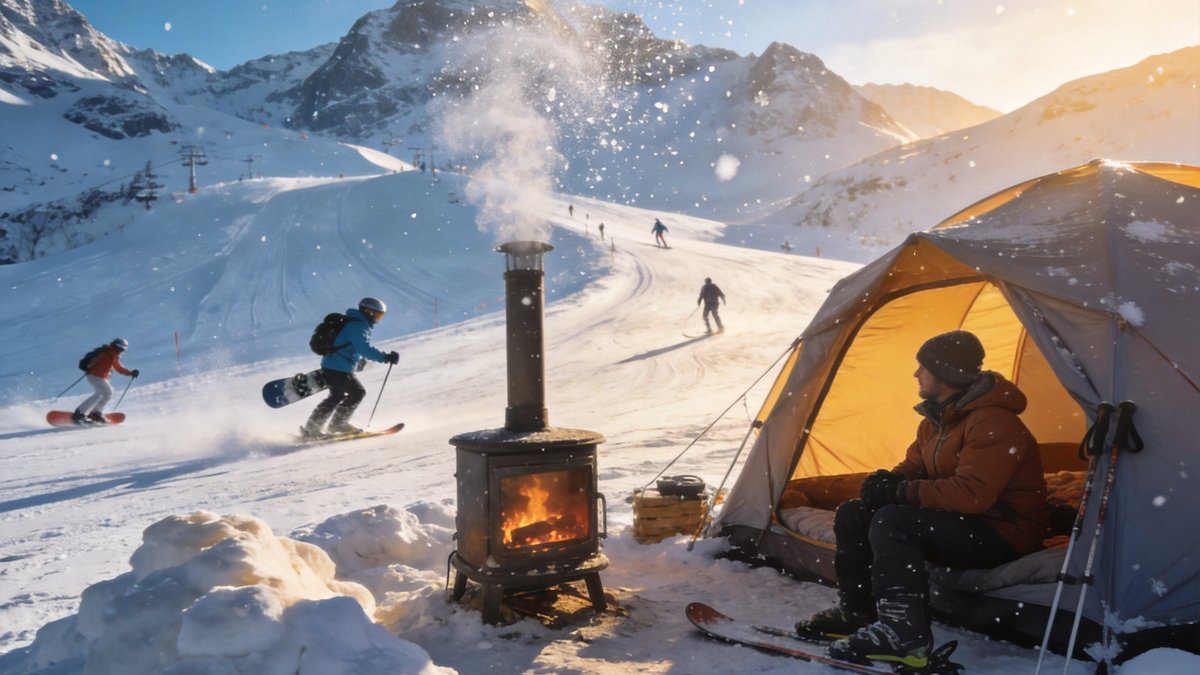
Winter camping offers solitude and beauty that summer campers never experience. Proper preparation transforms cold-weather camping from a survival challenge into a comfortable adventure.
Winter camping offers solitude and beauty that summer campers never experience. Proper preparation transforms cold-weather camping from a survival challenge into a comfortable adventure.
Four-season tents are designed to handle snow loads and wind loads that three-season tents cannot withstand. They feature stronger pole structures, more robust fabrics, and vestibules for gear storage. The trade-off is increased weight and reduced ventilation compared to three-season tents. For car camping, heavy-duty canvas hot tents with wood stoves provide luxury winter camping experiences.
Snow camping requires modified tent setup techniques. Dig a platform in the snow for your tent rather than pitching on uneven snow. Pack the platform by skiing or snowshoeing over it to create a firm base. Build snow walls around your tent for wind protection. Use snow stakes or deadman anchors rather than standard tent stakes which pull out of snow easily.
Sleeping platforms and snow trenches provide additional insulation from the cold ground. A snow trench 12-18 inches deep with snow walls blocks wind and traps warmer air. Sleeping platforms elevated on pine boughs or sleeping pads with high R-values prevent ground heat loss. Never sleep directly on snow without significant insulation underneath.
Winter sleeping bags are rated for temperatures far below what summer campers use. A zero-degree Fahrenheit bag is appropriate for most winter camping down to about 10 degrees. A minus-20-degree bag handles extreme cold. Down insulation provides the best warmth-to-weight ratio and compresses smaller than synthetic. The trade-off is that down loses insulating ability when wet.
Sleeping pad insulation is measured by R-value. Summer pads have R-values of 1-3. Winter camping requires pads with R-values of 5 or higher. Stacking two pads provides additional insulation: a closed-cell foam pad on the bottom with an inflatable pad on top. The foam pad provides backup insulation if the inflatable pad fails during the night.
Sleeping bag techniques maximize warmth. Store your sleeping bag in a compression sack during the day and fluff it thoroughly before use. Change into dry base layers before entering your bag. Boil water, fill a Nalgene bottle, and place it in your sleeping bag for warmth. Wear a warm hat and socks to bed. Eat a high-fat snack before sleeping to fuel your body's overnight heat production.
The base layer manages moisture next to your skin. Merino wool or synthetic fabrics wick sweat away from your body. Avoid cotton, which absorbs moisture and promotes rapid heat loss. Base layers should fit snugly without restricting movement. A lightweight base layer works for high-output activities like snowshoeing while a midweight layer provides warmth for lower-output activities.
The insulating mid-layer traps warm air close to your body. Fleece, wool sweaters, and synthetic puffy jackets provide insulation. Down jackets offer the best warmth-to-weight ratio for dry conditions. The mid-layer should be easily removable as activity levels change during the day. Multiple thin layers allow better temperature regulation than one thick layer.
The outer shell protects against wind, snow, and rain. A waterproof, breathable shell jacket and pants provide weather protection while allowing moisture to escape. Some winter campers prefer soft-shell pants for high-output activities, switching to hard-shell pants for camp and bad weather. Gaiters keep snow out of your boots and provide additional lower-leg insulation.
Cooking in winter requires a stove that performs in cold temperatures. Canister stoves with isobutane-propane fuel mixtures work down to about 20 degrees Fahrenheit. Below that temperature, liquid fuel stoves using white gas provide more reliable performance. Liquid fuel stoves require priming but deliver consistent output regardless of temperature. Practice using your stove at home before depending on it in winter conditions.
Melting snow for drinking water is a major activity in winter camping. Snow has very low density, requiring large volumes to produce drinking water. Plan on melting snow for 30-45 minutes per liter of water. Start with a small amount of water in your pot to prevent scorching, then add snow gradually. Filter or boil snow melt to remove any potential contaminants.
Hydration is more challenging in winter because you feel less thirsty and water freezes in bottles. Drink 3-4 liters of water daily. Store water bottles upside down in your tent so the opening freezes last. Insulated bottle parkas help prevent freezing. Carry a thermos with hot water for immediate drinking. Dehydration increases hypothermia risk, making conscious hydration effort essential.
Hypothermia is the primary risk in winter camping. Early symptoms include shivering, loss of coordination, confusion, and apathy. Treatment requires immediate warming: get the person into shelter, remove wet clothing, and apply external heat sources. Prevent hypothermia by staying dry, eating enough calories, and avoiding exhaustion. Recognize symptoms in yourself and your companions before they become severe.
Carbon monoxide poisoning is a risk when using stoves or heaters inside tents. Never use a stove or heater inside a tent without proper ventilation. Cook outside the tent entrance or in a well-ventilated vestibule. Battery-powered carbon monoxide detectors designed for camping provide an additional safety layer. Symptoms include headache, dizziness, and confusion similar to hypothermia.
Avalanche safety is essential for winter campers traveling in backcountry terrain. Carry avalanche safety equipment including beacon, probe, and shovel. Take an avalanche safety course and check daily avalanche forecasts. Choose campsites in safe zones away from avalanche paths. Avoid camping below loaded slopes, in gullies, or at the base of steep terrain.
"There is no bad weather, only bad clothing. This Norwegian saying captures the essence of winter camping. With the right gear and preparation, you can be comfortable in any conditions the natural world throws at you."
"Winter camping reveals a side of nature that few people see. The silence of a snow-covered forest at night, the clarity of stars in cold air, and the simple comfort of a warm sleeping bag after a day in the snow create experiences that summer camping cannot match."
Winter camping is safe for beginners with proper preparation, gear, and conservative decision-making. Start with car camping where you can retreat to your vehicle if conditions become uncomfortable. Progress to short backpacking trips near established trails before attempting remote winter expeditions. Never camp alone in winter until you have significant experience.
Moisture management is critical for winter sleeping bag performance. Air out your sleeping bag during the day to release accumulated moisture. Use a waterproof bivvy or tent with good ventilation to reduce condensation. Store your sleeping bag in a waterproof compression sack. Consider using a vapor barrier liner inside your sleeping bag to trap moisture away from the insulation.
Winter camping requires 4,000-6,000 calories daily due to increased energy expenditure for staying warm and moving through snow. High-fat foods provide sustained energy: nuts, cheese, butter, chocolate, and fatty meats. Dehydrated meals supplemented with olive oil add calories. Hot drinks and soups provide warmth and hydration at meals and before bed.
Winter bathroom needs require planning. Dig a cathole in the snow at least 200 feet from camp and water sources. Pack out all toilet paper in a sealed bag. In extreme cold, use a pee bottle to avoid leaving your sleeping bag at night. Mark your bottle clearly to avoid confusion with drinking water.
Respecting other campers and the environment makes the experience better for everyone. Keep noise levels down, especially after quiet hours. Observe the 200-foot rule for setting up camp away from water sources and trails. Pack out all trash, including biodegradable items like apple cores, which take weeks to decompose in natural environments. Following these principles ensures campsites remain pristine for future visitors.
Testing your gear before heading into the backcountry prevents unpleasant surprises. Set up your tent in the backyard and spray it with a hose to check for leaks. Test your stove outside to ensure it lights and burns evenly. Break in new boots with short walks before a long hike. A pre-trip gear check takes an hour and can save you from a miserable night in the woods.
Proper food storage protects both you and the wildlife in the area. Store all food, trash, and scented items in bear-proof containers or hang them from a designated pole at least 10 feet off the ground and 4 feet from the nearest tree trunk. Cook at least 100 yards from your tent to avoid attracting animals to your sleeping area. Never store food inside your tent, even for a short nap.