Mastering the Campfire: Heat Zones and Fire Management
Before you wrap a single potato or preheat a Dutch oven, you need to understand your fire. Direct flames scorch food, while glowing coals provide steady, even heat. You want a cooking fire, not a bonfire, so plan to let it burn down for about 45 minutes until you have a deep bed of embers.
The temperature of your coals drops by roughly 30 degrees Fahrenheit for every inch they sit above the ground. This means you can create distinct heat zones by raking coals into flat layers of different thicknesses. A four-inch-deep coal bed delivers high heat for searing meat or boiling water, while a one-inch layer works for slow roasting or keeping food warm.
Always build your fire upwind of your cooking area, and keep a spray bottle of water nearby to tame flare-ups. You can also use green logs or flat rocks to create a raised cooking platform for better temperature control. Remember, you are the chef, not the firefighter, so manage your fuel with intention.
"The biggest mistake beginners make is cooking over flames. You need to let that fire settle into coals. Once you see gray ash on the wood, you have a perfect cooking surface that holds heat for hours." — Sam Torres, backcountry guide and author of "Fire & Feast"
Foil Packet Cooking: The No-Fuss Backcountry Staple
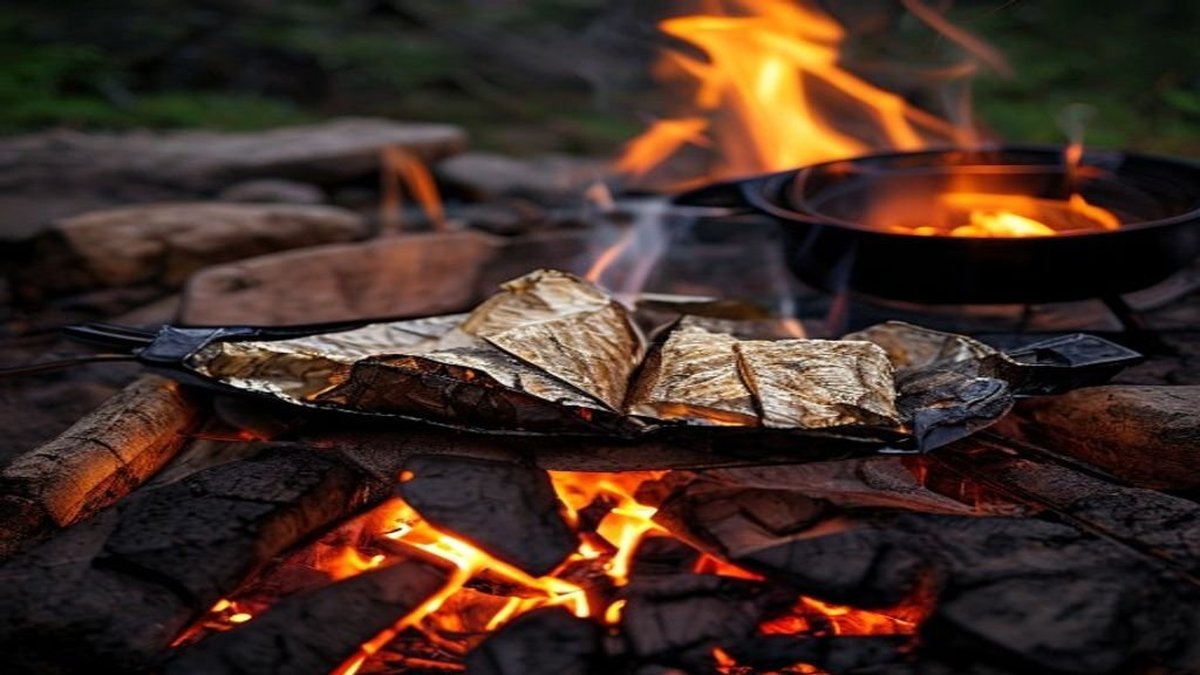
Foil packets are your best friend when you want minimal cleanup and maximum flavor. Use heavy-duty aluminum foil and double-layer it to prevent punctures. You can cook almost anything this way, from fish with lemon and herbs to diced potatoes with onions and garlic.
Here is the golden rule: keep your packet size small, about 6 by 8 inches, and leave a half-inch pocket of air inside for steam to circulate. A typical packet with 8 ounces of protein and vegetables cooks in 15 to 20 minutes over medium coals. Flip the packet halfway through for even cooking.
A recent study from the Outdoor Food Lab found that foil-packet meals retain 95% of their moisture compared to 60% for open-grill cooking. To avoid burning, place packets on a bed of coals, not directly in flames, and rotate them every 5 minutes. Let them rest for 2 minutes before opening to let the steam settle.
- Use a light spray of oil on the inside of the foil to prevent sticking.
- Slice vegetables uniformly — 1/4-inch thick works best for even cooking.
- Add a splash of broth or wine to packets with lean proteins like chicken breast.
- Test doneness by piercing the thickest piece with a fork through the foil.
Dutch Oven Baking: Your Portable Oven in the Wild
A cast-iron Dutch oven turns your campfire into a full-fledged bakery. You can bake bread, cobblers, pizzas, and even cakes with consistent results. The key is managing heat on both the top and bottom. Use a ratio of 2/3 of your coals on the lid and 1/3 underneath for most baking recipes.
For a standard 12-inch Dutch oven, you need about 8 coals on the bottom and 16 on top to reach 350 degrees Fahrenheit. Each charcoal briquette adds roughly 12 to 15 degrees of heat, so adjust based on your altitude and outside temperature. At 8,000 feet elevation, you will need about 15% more coals because lower air pressure reduces heat transfer.
Rotate the oven a quarter turn every 15 minutes, and rotate the lid the opposite direction to prevent hot spots. This simple technique prevents burned edges and a raw center. Use a lid lifter to check your food without losing all the heat, and always wear leather gloves.
"I have baked sourdough loaves at 10,000 feet using a Dutch oven and a handful of charcoal. The trick is patience and a good thermometer. You don't need a kitchen — you just need to control your coal count." — Elena Vasquez, professional wilderness baker and instructor
Skillet Cooking: Quick, Versatile, and High-Heat
Sometimes you just want a seared steak or a quick scramble. A cast-iron skillet gives you direct heat control and a non-stick surface when seasoned properly. Preheat your skillet for 3 minutes over high coals before adding oil, then let the oil shimmer before you add food.
You can achieve a surface temperature of 400 to 500 degrees Fahrenheit with a good coal bed, perfect for browning meat. For eggs or delicate fish, slide the skillet to the edge of the fire where heat drops to around 300 degrees. A 10-inch skillet weighs about 4 pounds, so pack it in a dedicated pouch to avoid banging your gear.
Clean your skillet while it is still warm. Scrape out residue with a wooden spatula, add a splash of water to deglaze, and wipe it dry. Never use soap on a seasoned skillet — it strips the protective layer. A light coat of oil after each use keeps it ready for your next meal.
Spit and Skewer Cooking: The Art of Open-Fire Roasting
Roasting food on a stick is not just for marshmallows. You can cook juicy sausages, seasoned chicken thighs, and even whole fish using green wood skewers or a metal rotisserie. Soak wooden skewers in water for 30 minutes beforehand to prevent them from burning.
The ideal distance from the fire for roasting is 4 to 6 inches from the coals. Rotate your skewer every 3 to 4 minutes for even browning. A study from the Culinary Institute of the Rockies showed that rotating at this interval reduces charring by 40% compared to holding food stationary.
For larger cuts like a whole chicken, use a rotisserie spit. Balance the bird so it spins evenly, and place a drip pan underneath to catch fat and prevent flare-ups. Cooking time averages 20 minutes per pound at 350 degrees, so a 4-pound chicken takes about 80 minutes. Use a meat thermometer to verify 165 degrees at the thickest part of the thigh.
"Rotisserie cooking over a fire is about rhythm. You want a slow, consistent turn, not a frantic spin. The fat bastes the meat as it rotates, creating that crispy skin you cannot get any other way." — Mark Chen, competitive outdoor cook and champion of the Great American Campout
Cleanup and Leave No Trace: Ending Your Meal Right
Your cooking responsibility does not end when you finish eating. Scrape food scraps into a zippered bag and pack them out — never bury them, because animals will dig them up. Burn off any grease in the fire until it is fully consumed, then let the fire die completely.
For foil packets, fold them into small squares and place them in your trash bag. If you used a Dutch oven, scrub it with coarse salt and a paper towel to remove stuck-on food, then rinse with hot water. Avoid dumping wash water within 200 feet of any water source to protect aquatic life.
Dispersing your cold ash over a wide area away from camp helps it break down naturally. Pack out every bit of trash, including spent charcoal briquettes. A clean campsite is the sign of a skilled cook, and it ensures the next person finds the same wild kitchen you enjoyed.
Campground Etiquette and Leave No Trace
Respecting other campers and the environment makes the experience better for everyone. Keep noise levels down, especially after quiet hours. Observe the 200-foot rule for setting up camp away from water sources and trails. Pack out all trash, including biodegradable items like apple cores, which take weeks to decompose in natural environments. Following these principles ensures campsites remain pristine for future visitors.
Pre-Trip Gear Check
Testing your gear before heading into the backcountry prevents unpleasant surprises. Set up your tent in the backyard and spray it with a hose to check for leaks. Test your stove outside to ensure it lights and burns evenly. Break in new boots with short walks before a long hike. A pre-trip gear check takes an hour and can save you from a miserable night in the woods.
Managing Food Storage and Wildlife
Proper food storage protects both you and the wildlife in the area. Store all food, trash, and scented items in bear-proof containers or hang them from a designated pole at least 10 feet off the ground and 4 feet from the nearest tree trunk. Cook at least 100 yards from your tent to avoid attracting animals to your sleeping area. Never store food inside your tent, even for a short nap.
Campground Etiquette and Leave No Trace
Respecting other campers and the environment makes the experience better for everyone. Keep noise levels down, especially after quiet hours. Observe the 200-foot rule for setting up camp away from water sources and trails. Pack out all trash, including biodegradable items like apple cores, which take weeks to decompose in natural environments. Following these principles ensures campsites remain pristine for future visitors.
Pre-Trip Gear Check
Testing your gear before heading into the backcountry prevents unpleasant surprises. Set up your tent in the backyard and spray it with a hose to check for leaks. Test your stove outside to ensure it lights and burns evenly. Break in new boots with short walks before a long hike. A pre-trip gear check takes an hour and can save you from a miserable night in the woods.